

Adelaide Botanic Garden: glasshouses, roses, guided walks and more
Plan a visit to the free Adelaide Botanic Garden: the 1870s Palm House, the Bicentennial Conservatory, Ficus Avenue, the rose gardens, the First Creek Wetland, the daily free guided walk, and what to know before you go.
Updated 4 min read

In this article
Our picks
How we chose
The garden itself, the restaurant inside it and the neighbours this guide suggests on North Terrace and across Botanic Park, all listed in our directory and confirmed on their listings in November 2026. A starting list, not a ranking.
No listing paid for its place here; a business with a paid relationship with us cannot be picked.
Pick 1: Adelaide Botanic Garden
Attractions · Adelaide · checked
The garden's own listing: 50 hectares with the Palm House, Bicentennial Conservatory, Amazon Waterlily Pavilion and Museum of Economic Botany; free entry daily.
Restaurants · Adelaide · checked
A fine-dining restaurant in a heritage tea house inside the garden, entered from Friends Gate on Plane Tree Drive; bookings online.
Pick 3: South Australian Museum
Museums · Adelaide · checked
The museum on North Terrace, a short walk west of the main gate, open daily from 10am with a café and shop.
Pick 4: Art Gallery of South Australia
Art Galleries · Adelaide · checked
The state gallery next door on North Terrace, free to enter and open daily from 10am, with a café inside.
Pick 5: Adelaide ZooBest for families
Attractions · Adelaide · checked
The zoo across Botanic Park on Frome Road, open every day of the year; an easy add-on for a day with children.
We may earn a commission if you book through this link. It never changes the price you pay.
The Adelaide Botanic Garden sits at the north-east corner of the city centre, at the end of North Terrace, and it is free to enter every day of the year. It is one of the great pleasures of the city: a Victorian glasshouse, one of the largest conservatories in the southern hemisphere, an avenue of enormous fig trees, roses, a wetland and lawns, all a few minutes' walk from the museums and galleries.
This guide helps you choose what to see, whether you have an hour or a whole day. Opening times vary through the year and some glasshouses close in extreme heat, so check the garden's website before you go.
The short version
- Free entry, every day, from early morning until early evening (times change by season).
- Free guided walk with a volunteer guide most mornings at 10:30am.
- Don't miss: the Palm House, the Bicentennial Conservatory, Ficus Avenue and the rose gardens.
- With children: the Kitchen Garden, the wetland boardwalks and the big lawns.
- Nearby: the South Australian Museum and the Art Gallery on North Terrace; Adelaide Zoo across Botanic Park.
Join the free guided walk
If you want to understand what you are looking at, start here. Volunteers from the Friends of the Botanic Gardens lead a guided walk from the Schomburgk Pavilion at 10:30am most days. It takes about an hour and a half, and no booking is needed unless you are a group of five or more. Walks are not held on Christmas Day or Good Friday, or when a very hot day is forecast.
The glasshouses
The Palm House
The Palm House is a Victorian glasshouse, made in Bremen, Germany, and shipped to Adelaide in the 1870s. Carefully restored, it now holds a collection of plants from Madagascar, many of them endangered in the wild. It is small, beautiful and one of the most photographed buildings in the city. Its opening hours are shorter than the garden's and change between summer and winter.
The Bicentennial Conservatory
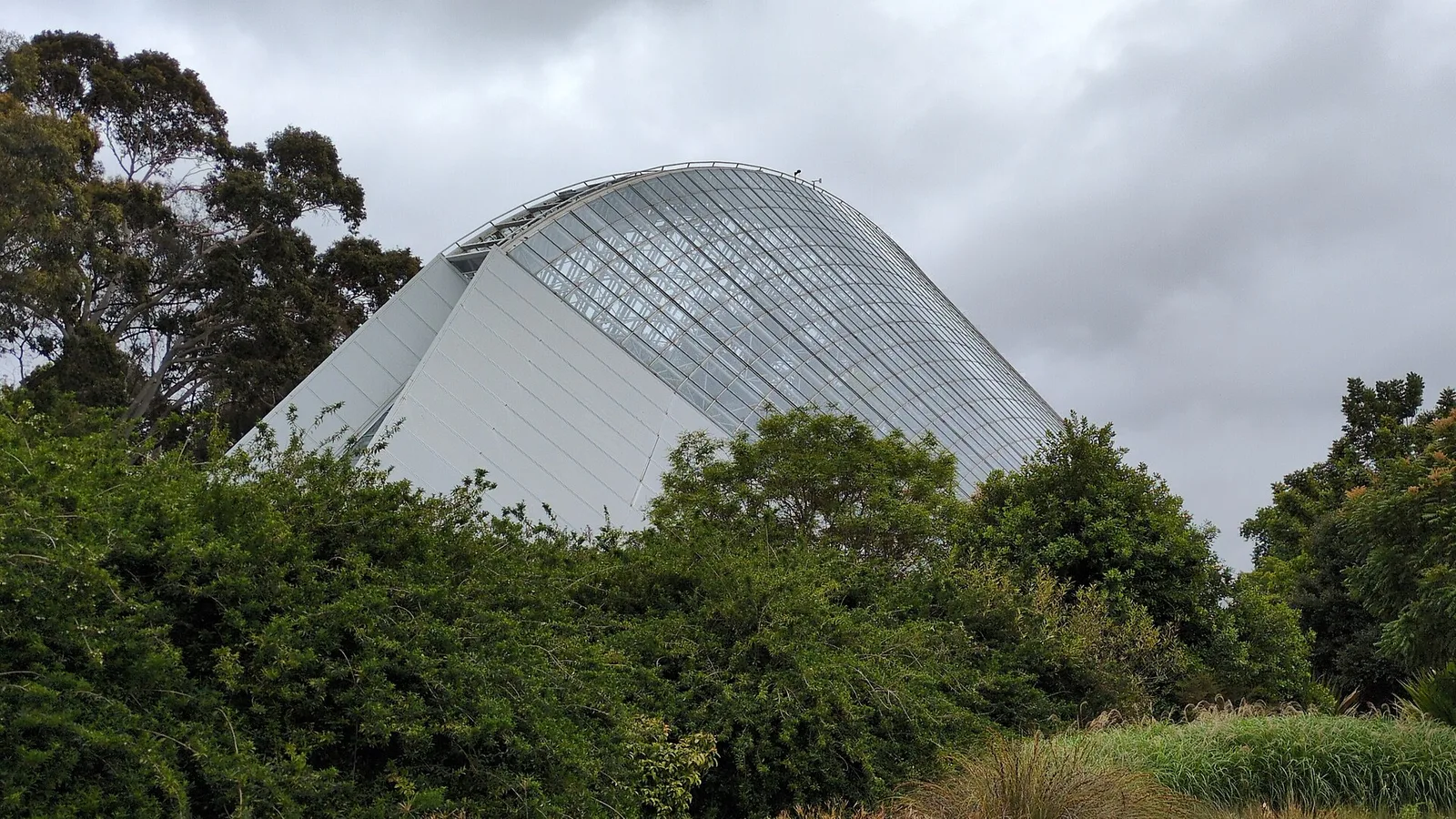
Built to celebrate Australia's 1988 bicentenary, the Bicentennial Conservatory is a single curved span of glass sheltering a lowland tropical rainforest, with walkways at ground level and up among the canopy. It is cool and humid inside, a welcome change on a dry summer day, and both walkways are wheelchair accessible. It closes on Christmas Day and can close in extreme heat.
The Amazon Waterlily Pavilion
A smaller glasshouse built around a pond for the giant Amazon waterlily, whose leaves can grow wider than a person is tall. It is at its best in the warmer months.
Trees, roses and water
Ficus Avenue is lined with Moreton Bay fig trees around 150 years old, their roots spreading across the ground and their canopy meeting overhead. It is the coolest walk in the garden on a hot afternoon.
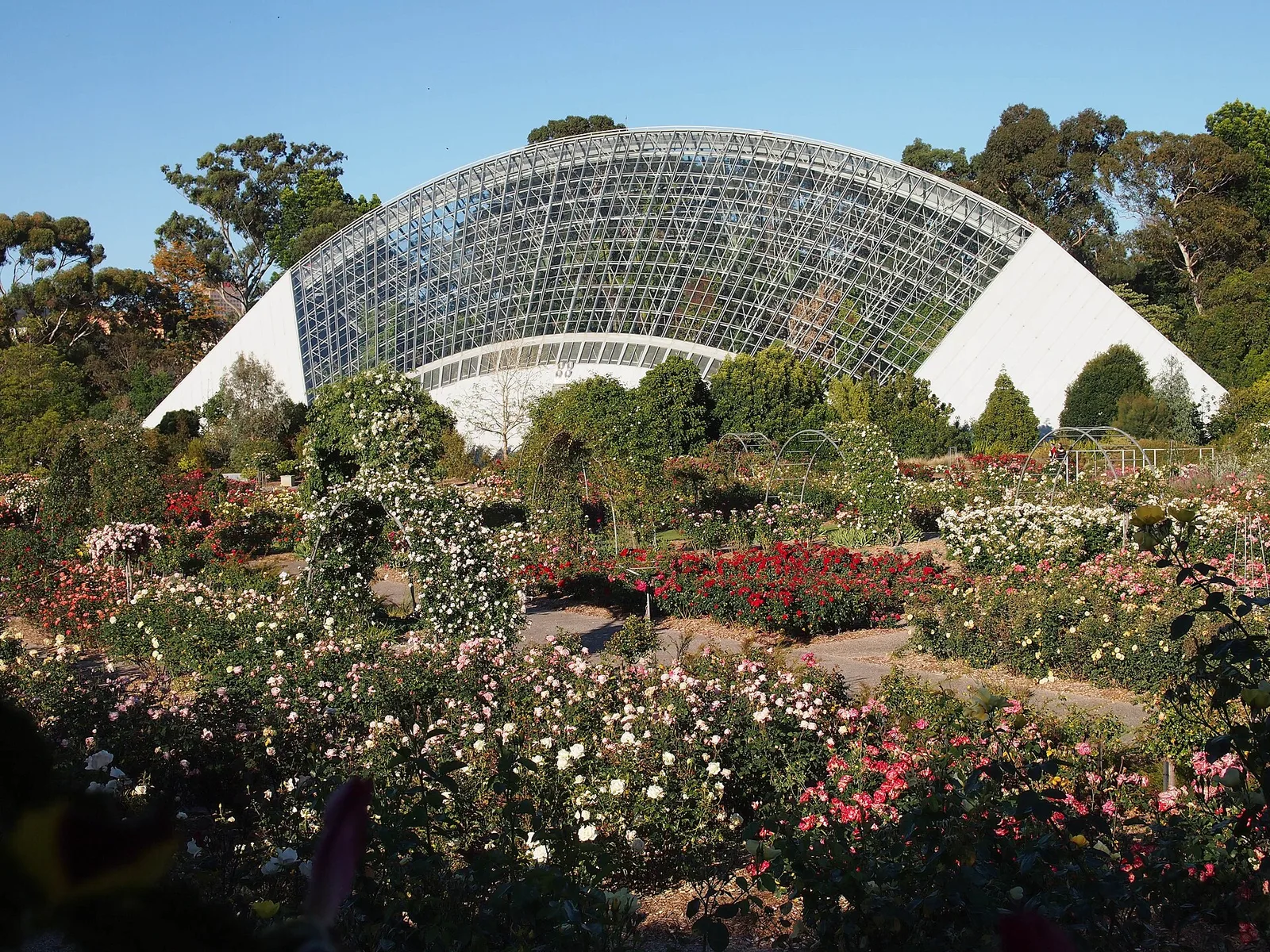
The rose gardens. The International Rose Garden and the National Rose Trial Garden hold thousands of roses, at their peak in spring (October and November) and again in autumn. The trial garden tests new varieties before they reach Australian gardens.
The First Creek Wetland shows how a wetland cleans and stores water, with boardwalks over the water and plenty of birds. It is a good stop with children.
The Museum of Economic Botany is a single Victorian room of timber cabinets displaying seeds, fibres, foods and medicines made from plants. It is free and takes twenty minutes, and it is one of the most unexpected rooms in Adelaide.
With children
The Kitchen Garden was designed as a learning space for children, with food plants grown at their height. The wetland, the lake's ducks and the wide lawns make the rest of the visit easy, and the paths suit prams. Our guide to things to do with kids has more ideas nearby, including Adelaide Zoo across Botanic Park.
Getting there and getting around
- On foot: from North Terrace, walk east past the museum and gallery; the main gate is at the end of the street.
- By tram: the free city tram stops on North Terrace near the garden.
- Inside: most paths are flat and sealed, with wheelchair access to both conservatory walkways. Toilets and drinking water are near the main buildings.
- Food: there is a restaurant and café in the garden, or bring a picnic for the lawns.
When to go
- Spring (September to November): roses, wisteria and blossom; the busiest and best time.
- Summer: go early. On very hot days walks are cancelled and glasshouses may close; Ficus Avenue and the conservatory are the coolest places.
- Autumn: the deciduous trees turn colour and the second rose flush arrives.
- Winter: quiet, green and good for the glasshouses.
More from the city
The garden is the eastern end of the free North Terrace cultural strip: see our guide to free things to do in the city and our guide to museums. For the bigger, cooler garden in the Hills, see Mount Lofty Botanic Garden in our guide to walks near Adelaide.
Frequently asked questions
Is the Adelaide Botanic Garden free?
Yes. Entry to the garden, its glasshouses and the free guided walk costs nothing. Some special events and exhibitions can be ticketed.
When are the free guided walks at the Adelaide Botanic Garden?
Volunteer guides lead a walk from the Schomburgk Pavilion at 10:30am most days. It takes about an hour and a half and needs no booking unless you are a group of five or more. Walks are not held on Christmas Day, Good Friday or very hot days.
What is in the Palm House?
A collection of plants from Madagascar, many of them endangered in the wild, inside a restored Victorian glasshouse made in Germany in the 1870s.
When do the roses flower at the Adelaide Botanic Garden?
The rose gardens are at their best in October and November, with a second flush in autumn.
Is the Adelaide Botanic Garden accessible?
Most paths are flat and sealed, and both walkways of the Bicentennial Conservatory are wheelchair accessible. Check the garden’s website for current access information and any closures.
Your next customer could start right here.
Introduce your business to people discovering Adelaide: locals, visitors and the businesses that serve them.
Explore placements and request a private quote
Sources
Where the facts come from
The 3 references this article was checked against.
- Adelaide Botanic Garden (opens in a new tab)
Botanic Gardens and State Herbarium · botanicgardens.sa.gov.au
Opening hours, free entry, glasshouses and access.
- Free guided walks, Adelaide Botanic Garden (opens in a new tab)
Botanic Gardens and State Herbarium · botanicgardens.sa.gov.au
Daily 10:30am walks from the Schomburgk Pavilion.
- Adelaide Botanic Garden brochure (opens in a new tab)
Botanic Gardens and State Herbarium · cdn.environment.sa.gov.au
The Palm House, the conservatory, the rose gardens and the wetland.
Comments
No comments yet. Be the first to join the conversation.
Leave a comment
Every comment is read by a moderator before it appears. Your email address is never published; it is used only to contact you about this comment.
More from Adelaide Sphere

Local guideThings to do
Art Gallery of South Australia: a guide to the collection, Tarnanthi and free entry
How to visit the Art Gallery of South Australia on North Terrace: what the collection is known for, free entry and ticketed exhibitions, the Tarnanthi celebration of Aboriginal and Torres Strait Islander art, and tips for visiting with children.
By Adelaide Sphere

Local guideThings to do
Free things to do in Adelaide: a city-centre guide
A day in central Adelaide that costs nothing: free museums and galleries on North Terrace, the Botanic Garden and its daily guided walk, the riverbank, a city lookout, arcades, markets and the free city tram.
By Adelaide Sphere

Local guideThings to do
Adelaide Zoo: a guide to the giant pandas, the history and getting there
Plan a day at Adelaide Zoo: the giant pandas Yi Lan and Xing Qiu, a zoo that has stood beside the Botanic Garden since 1883, how to get there on foot, by bus or by boat along the river, and tips for visiting with children.
By Adelaide Sphere