

Australia Day in Adelaide: 26 January, its events and its many meanings
On 26 January Adelaide holds a First Nations-led dawn ceremony, a 21-gun salute and, in most years, an evening of light and performance on the Riverbank, while many people mark the day as Survival Day or Invasion Day. A guide to the program, the history and the heat.
6 min read

In this article
For some South Australians, 26 January is a day off with a barbecue, the cricket and a swim. For others it is the day they become Australian citizens. For many Aboriginal and Torres Strait Islander people, and many others who stand with them, it is a day of mourning, protest and survival. In Adelaide, all of these happen on the same day, often a few hundred metres apart.
This guide explains the official program run by the Australia Day Council of South Australia, how citizenship ceremonies work, and the history behind the different names for the day. Programs are announced each summer and can change at short notice, as they did in 2026, so check the official site for this year’s times.
The short version
- Public holiday: 26 January. If it falls on a weekend, the following Monday is the holiday instead. In 2027 it is a Tuesday.
- Dawn: Mourning in the Morning, a First Nations-led smoking ceremony at Elder Park (Tarntanya Wama) on the River Torrens (Karrawirra Parri).
- Midday: a 21-gun salute at the Torrens Parade Ground on Victoria Drive.
- Evening, in most years: Aus Lights on the River, a free program of light, music and performance at Elder Park, with a community parade.
- Also on the day: a march and rally that gathers in Victoria Square (Tarntanyangga), and citizenship ceremonies run by local councils.
- Heat: late January can be extremely hot. In 2026 the evening program was cancelled on safety advice.
The official program
The Australia Day Council of South Australia, a not-for-profit body, runs the state’s official program with funding from the National Australia Day Council, the City of Adelaide and the state government. Its 2025 program ran under the theme “Respect, Reflect, Celebrate”.
Mourning in the Morning
The day begins early at Elder Park with Mourning in the Morning, a ceremony led and shaped by South Australian First Nations community leaders and open to everyone, Aboriginal and non-Aboriginal alike. In 2026 people gathered at 7.30am for a welcome to Kaurna country, followed by First Nations speakers, musicians and dancers, and a smoking ceremony conducted by Elder Uncle Moogy Sumner. The council describes it as a time to honour Aboriginal and Torres Strait Islander people, histories, cultures and perspectives.
The 21-gun salute
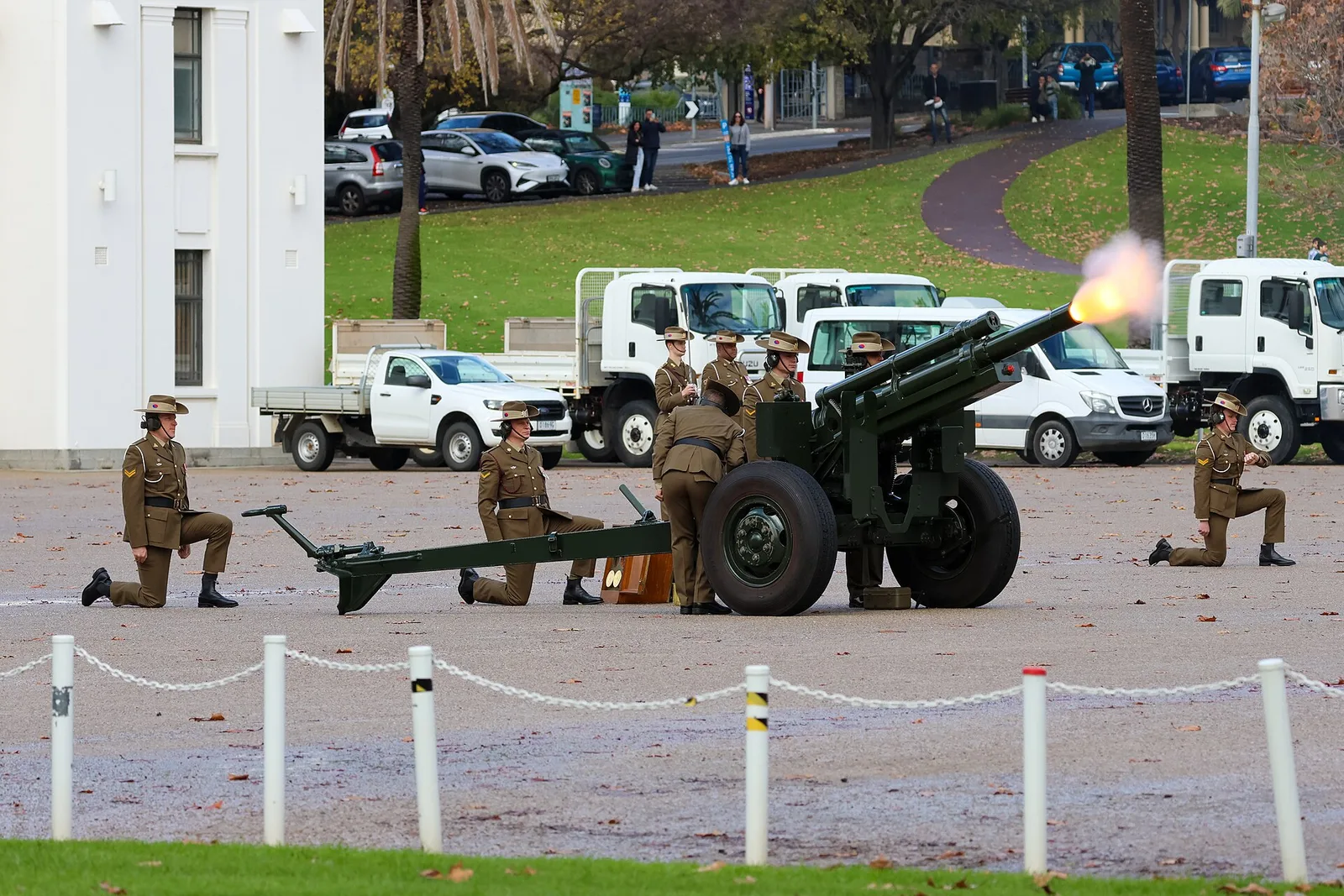
At midday a 21-gun salute is fired at the Torrens Parade Ground on Victoria Drive, just north of the city centre. It is short, loud and free to watch from a respectful distance.
Aus Lights on the River
In the evening, Aus Lights on the River turns Elder Park into a free outdoor program of light installations, sound and vision, with activities for children, a parade by community and multicultural groups, and an official ceremony. In 2025 it ran from 5pm to 11pm, with the parade at 7pm and the official ceremony at 8pm.
In 2026 the evening event and the parade were cancelled because of an extreme heat forecast, after advice from emergency services and event safety specialists; the morning ceremony went ahead as planned. It is a useful reminder to check the Australia Day Council’s website on the day itself.
Citizenship ceremonies
For many people, becoming an Australian citizen ends at a ceremony where they make the pledge of commitment. Local councils usually arrange these ceremonies, and some hold them on or around 26 January. According to the Department of Home Affairs:
- Applicants are invited about four weeks before the ceremony, by their council or the department, and cannot choose the date or place.
- You become a citizen when you make the pledge, not before.
- You should allow at least two hours, and the ceremony itself takes about an hour.
- The invitation says whether you can bring guests, and how many.
If you have questions about your own application, ask the Department of Home Affairs directly; this guide cannot advise on individual cases.
Why 26 January means different things
On 26 January 1788 Captain Arthur Phillip raised the British flag at Sydney Cove, establishing a British colony on land that Aboriginal and Torres Strait Islander peoples had cared for over tens of thousands of years. The date was first marked as Foundation Day in New South Wales. The name Australia Day was adopted across the states by 1935, and only since 1994 has the whole country observed the public holiday on 26 January itself.
On 26 January 1938, the 150th anniversary, Aboriginal activists including Jack Patten, William Ferguson and William Cooper held a Day of Mourning and Protest in Sydney. They called for full citizenship and equality, and the National Museum of Australia describes the gathering as the beginning of the modern Aboriginal political movement. Marking the Day of Mourning became an annual event, and over time it evolved into what is now NAIDOC Week.
Today the day carries several names, each with its own meaning:
- Australia Day: a celebration of the country and its people, and for many a day of new citizenship.
- Invasion Day: for many Aboriginal and Torres Strait Islander people, the date marks the invasion of lands that were already theirs, and they march for sovereignty and justice.
- Survival Day: a recognition that First Nations people, cultures and communities have survived colonisation and continue.
- Day of Mourning: a time to mourn dispossession, violence and policies such as forced removal.
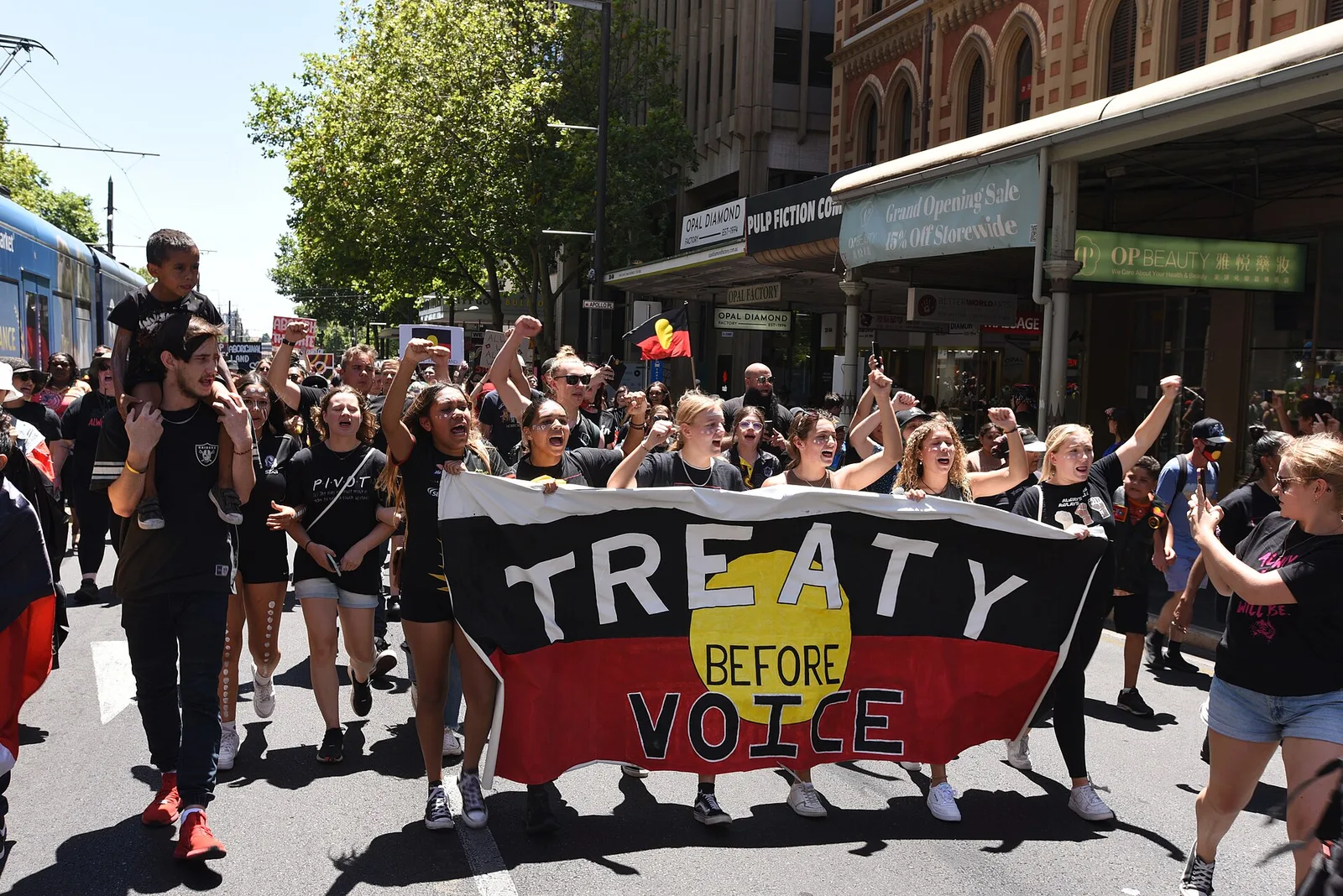
In Adelaide, a march and rally has gathered in Victoria Square (Tarntanyangga) on 26 January in recent years, with speeches, music and a march through the city; in 2023 protesters marched towards Parliament House. It is organised by community groups, not by the Australia Day Council, and times are announced each year.
However you spend the day, listening is a good place to start. Our guide to Kaurna culture in Adelaide introduces the traditional owners of the Adelaide Plains and places in the city where you can learn more.
Getting there
Elder Park is on King William Road beside the Adelaide Festival Centre, a short walk from North Terrace, the Adelaide Railway Station and city tram stops. The Torrens Parade Ground is on Victoria Drive, along the river to the east. Victoria Square is in the centre of the city grid, with a tram stop in the square. Timetables can differ on a public holiday, so check the Adelaide Metro journey planner before you set out, and expect road closures around the Riverbank on the evening of the event. Our public transport guide explains tickets and the network.
Before you go
- Watch the weather: 26 January falls in the hottest part of the year. The Australia Day Council advises dressing for the forecast: a hat, sunscreen, long sleeves and cool, breathable clothing. Carry water, and see our heatwave safety guide.
- Check for changes on the day: events can be shortened or cancelled at short notice in extreme heat.
- At the beach: swim between the flags at a patrolled beach; our beach safety guide explains how.
- Shops: it is a public holiday, so larger suburban shops are closed and city trading hours are limited; cafés and small shops can open as they choose.
- Be respectful: ceremonies at dawn and the rally later in the day matter deeply to the people taking part. Ask before photographing people.
For the summer around it, see our guides to the Tour Down Under, Adelaide in summer and South Australia’s public holidays. Free events across the year are listed on our free events page.
Frequently asked questions
What is on in Adelaide on Australia Day?
The Australia Day Council of South Australia runs Mourning in the Morning, a First Nations-led smoking ceremony at Elder Park, a 21-gun salute at the Torrens Parade Ground at midday and, in most years, Aus Lights on the River in the evening. A march and rally also gathers in Victoria Square. Check the official program each year.
What is Mourning in the Morning?
It is a First Nations-led ceremony held early on 26 January at Elder Park (Tarntanya Wama), with a welcome to Kaurna country, speakers, music, dance and a smoking ceremony. It is open to Aboriginal and Torres Strait Islander people and non-Indigenous Australians.
Why do some people call 26 January Invasion Day or Survival Day?
The date marks the raising of the British flag at Sydney Cove in 1788. Many Aboriginal and Torres Strait Islander people see it as the start of invasion and dispossession, and mark it as a day of mourning and protest, or as Survival Day to recognise that their peoples and cultures continue.
Is Australia Day a public holiday in South Australia?
Yes. The public holiday is on 26 January, or the following Monday if 26 January falls on a weekend. In 2027 it falls on Tuesday 26 January.
Are Australia Day events cancelled in extreme heat?
They can be. In 2026 the evening Aus Lights on the River program and parade were cancelled because of an extreme heat forecast, on the advice of emergency services, while the morning ceremony went ahead. Check the Australia Day Council of South Australia website on the day.
Your next customer could start right here.
Introduce your business to people discovering Adelaide: locals, visitors and the businesses that serve them.
Explore placements and request a private quote
Sources
Where the facts come from
The 7 references this article was checked against.
- Aus Lights on the River 2026 (opens in a new tab)
Australia Day Council of South Australia · australiadaysa.com.au
Mourning in the Morning, the 21-gun salute, the heat cancellation of the evening program, funding partners and weather advice.
- Aus Lights on the River 2025 (opens in a new tab)
Australia Day Council of South Australia · australiadaysa.com.au
Evening program, times, parade and theme.
- Citizenship ceremony (opens in a new tab)
Department of Home Affairs · immi.homeaffairs.gov.au
Who arranges ceremonies, invitations, the pledge and what happens on the day.
- Day of Mourning (opens in a new tab)
National Museum of Australia · nma.gov.au
The 1938 Day of Mourning, its organisers and its significance.
- Australia Day, Invasion Day, Survival Day: What’s in a name? (opens in a new tab)
SBS NITV · sbs.com.au
Meanings of the day’s names and the history of 26 January, including 1935 and 1994.
- Kaurna Elder calls for renaming of Adelaide (opens in a new tab)
SBS NITV · sbs.com.au
Mourning in the Morning and the rally in Victoria Square/Tarntanyangga.
- Public holidays (opens in a new tab)
SafeWork SA · safework.sa.gov.au
Australia Day public holiday date and weekend rule.
Comments
No comments yet. Be the first to join the conversation.
Leave a comment
Every comment is read by a moderator before it appears. Your email address is never published; it is used only to contact you about this comment.
More from Adelaide Sphere

Local guideFestivals and events
Tour Down Under: how to watch the race, from the Tour Village to Willunga Hill
A spectator’s guide to the Tour Down Under each January: how the race works, the free Tour Village in Victoria Square, the best ways to watch a stage, Willunga Hill, and tips for a day on the roadside.
By Adelaide Sphere
Local guideFestivals and events
Japanese Film Festival Adelaide 2026: films, sessions and tips
The Japanese Film Festival returns to Palace Nova Eastend from 23 to 28 November 2026 with three new films from Kiyoshi Kurosawa, Hirokazu Koreeda and Kōhei Kadowaki. Here are the sessions, how to book, getting to Rundle Street and where to eat.
By Adelaide Sphere

Local guideFestivals and events
Where to meet Santa in Adelaide: the Magic Cave and beyond
Where children can meet Santa in Adelaide each Christmas: the story of the Magic Cave since the John Martin’s days, Santa at the pageant and the carols, shopping-centre visits, sensory-friendly sessions and tips for a happy photo.
By Adelaide Sphere