

Driving in South Australia: a visitor’s guide to licences, road rules and country roads
What visitors need to know before driving in South Australia: using an overseas licence, keeping left, default speed limits and the 25 km/h rule, mobile phones, seatbelts, and staying safe on long country drives.
6 min read

In this article
A car opens up the parts of South Australia that buses do not reach: the wine regions, the Fleurieu coast, the Hills and, further out, the Flinders Ranges and the long highways west and north. Driving here is straightforward once you have the basics, but for many visitors there is a lot that is new: the side of the road, the signs, the speed limits and the distances.
This guide pulls together what the State Government tells visitors about licences and road rules, and its safety advice for country driving. It is a summary, not legal advice; the Driver’s Handbook on the My Licence website and the Australian Road Rules are the authority, and rental companies may set extra conditions.
The short version
- Keep left. Australians drive on the left side of the road, from the right-hand side of the car.
- Bring your licence. Visitors can drive on a current overseas licence in English, or with an approved translation or an international driving permit, and must carry it with their passport.
- 50 and 100. The default limit is 50 km/h in built-up areas and 100 km/h outside them, unless signs say otherwise.
- 25 km/h past emergency vehicles with flashing lights, past stopped school buses and in school zones when children are present.
- No handheld phone while driving, not even to take a photo.
- Avoid country driving at dawn and dusk, when wildlife is most active.
Licences for overseas visitors
If you are visiting Australia, you can drive the same type of vehicle your current licence allows, following any conditions on it. You need one of these:
- a current licence from another country written in English;
- a current licence with an approved English translation; or
- an international driving permit (IDP) with your home licence.
An IDP must come from the same country that issued your licence, and you must carry the licence as well. Rental companies may ask for an IDP. Translations are accepted only from a NAATI-accredited translator, a consulate in Australia, or the government translating services, and must be originals. You must carry your licence documents whenever you drive and show them, with your passport, if police ask. You cannot drive if you are disqualified in any country, and if your licence expires while you are here you need an Australian licence to keep driving.
People who become permanent residents of South Australia must get a South Australian licence within 90 days. If you are moving here, see our guide to moving to Adelaide. Visitors from another Australian state can drive on their interstate licence, keeping to its conditions.
The road rules that matter most
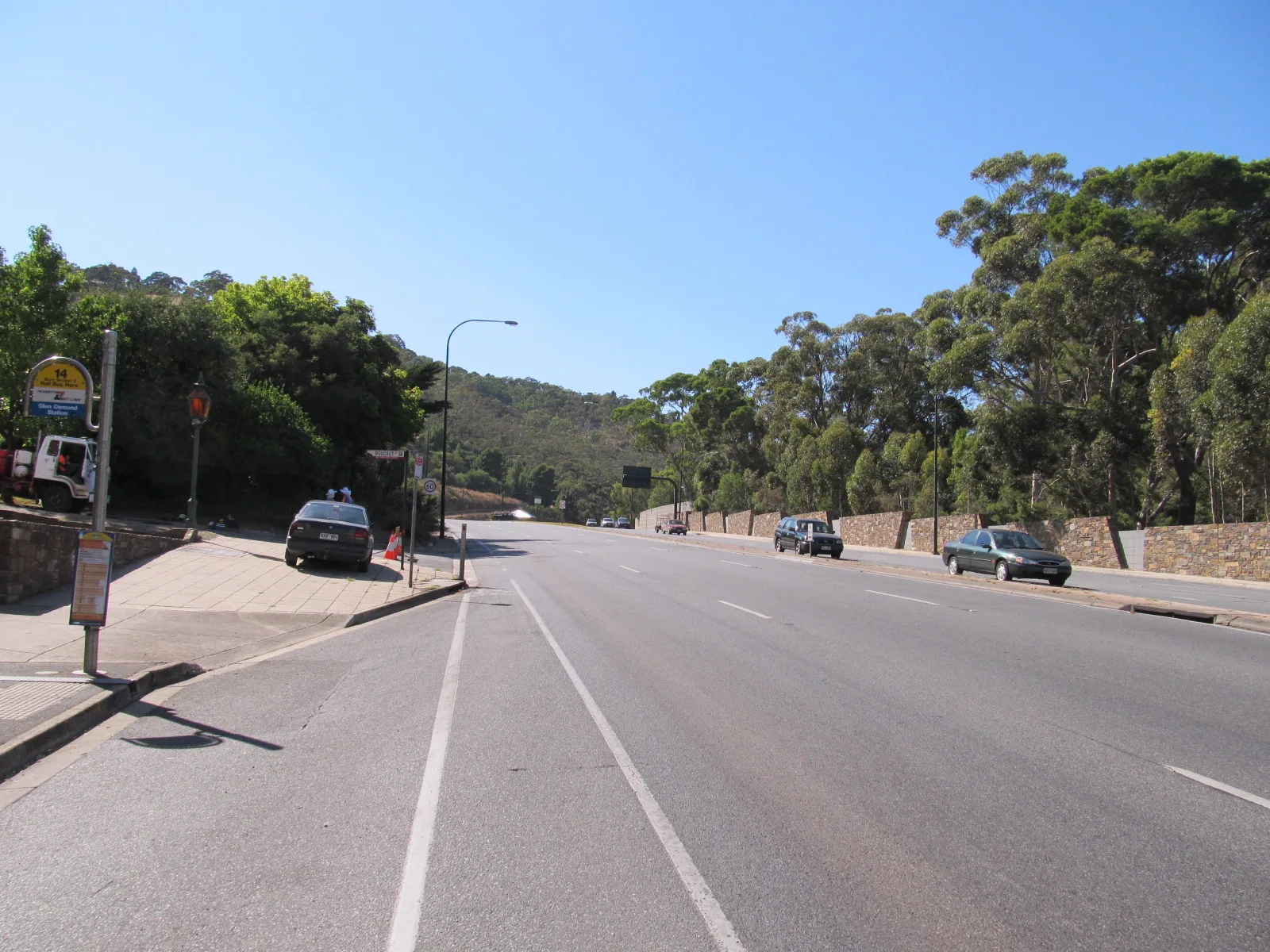
Drive on the left. It is the most common difficulty for international visitors, especially when turning and at roundabouts. Service SA centres have “Drive on left” reminder stickers, and the government publishes a printable card for the dashboard.
Speed limits. Unless a sign or your licence conditions say otherwise, the limit is 50 km/h in built-up areas and 100 km/h outside them. Some rural roads are signed at 110 km/h. Police check speeds with cameras, radar and laser on all types of roads.
The 25 km/h rule. In South Australia you must slow to 25 km/h:
- when passing a stationary emergency services vehicle with flashing red or blue lights;
- when passing a stopped breakdown service vehicle with flashing amber lights that is helping someone;
- when passing a school bus that has stopped to pick up or set down children;
- in school zones when children are present; and
- wherever a 25 km/h sign is shown, such as at roadworks.
Seatbelts. Everyone in the car must wear a seatbelt or use a suitable child restraint, and the driver is responsible for passengers.
Mobile phones. You must not use a handheld mobile phone while driving, including making or answering calls and texting. Pull off the road somewhere safe before taking a photo. South Australia operates mobile phone detection cameras on major metropolitan roads, and fines and demerit points apply.
Alcohol and drugs. Police carry out random roadside breath and drug tests, and penalties can include losing your licence on the spot. The simplest rule for visitors: if you are drinking, don’t drive.
Bikes, trams and trucks. Leave at least 1 metre when passing a bike rider where the limit is 60 km/h or less, and 1.5 metres above that. In Adelaide you share some roads with trams, and on country highways with road trains: very long trucks that take off slowly and need a long distance to stop, so give them room. See our cycling rules guide for more on sharing the road.
Driving in the country
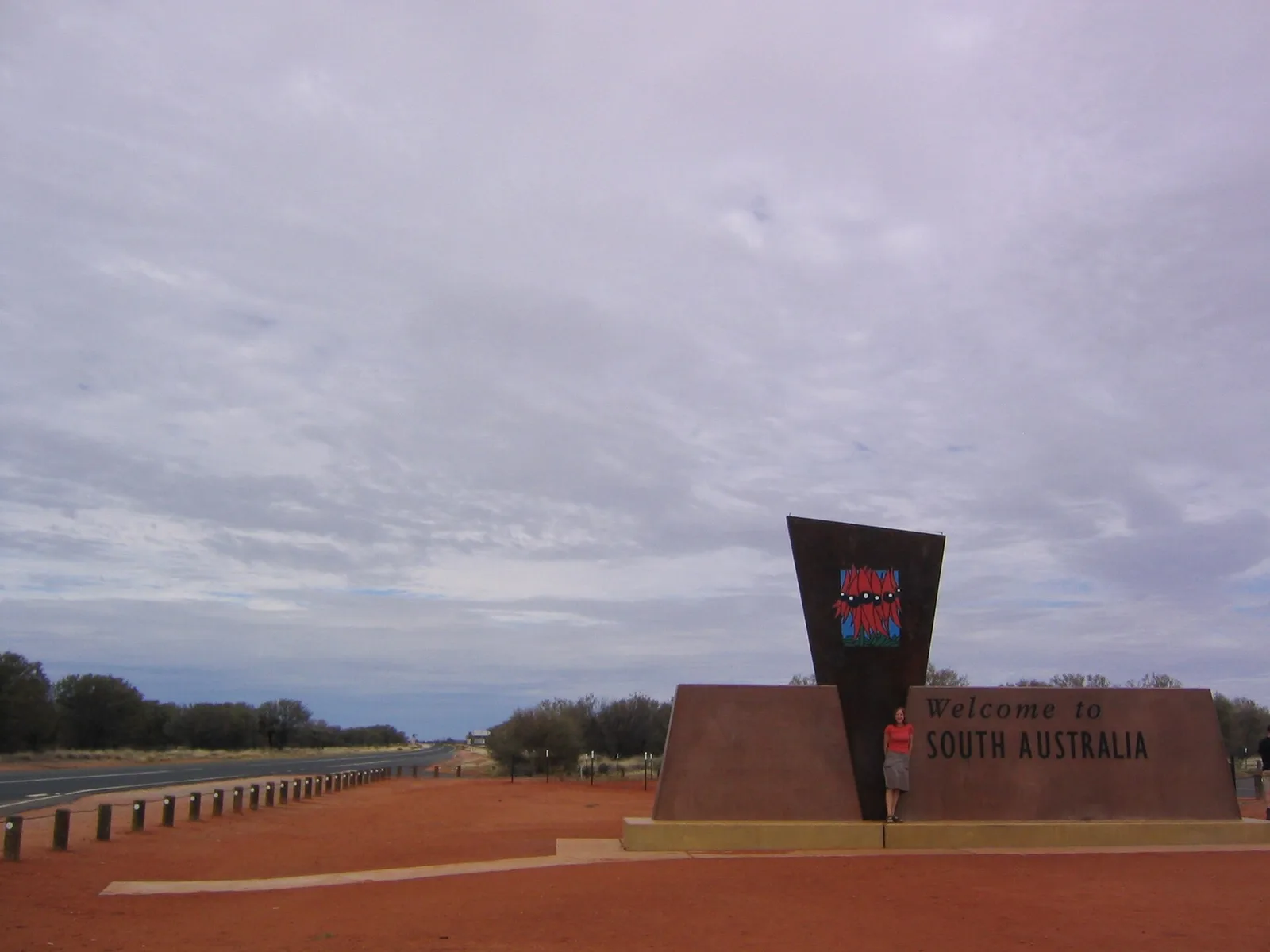
South Australia is big, and most of it is a long way from Adelaide. The State Government warns visitors about long distances between towns, extreme heat, flash flooding, bushfires and animals on the road. A few habits make a long drive much safer.
Wildlife and livestock. Kangaroos, other wildlife and stock can appear suddenly, especially at dawn and dusk, when they are hardest to see. Avoid driving in regional areas between dusk and dawn where you can. Slow down where animal warning signs are posted, and if an animal is on the road, brake safely rather than swerving, which can make you lose control.
Fatigue. Tiredness is a major factor in crashes, and it is more likely on long country trips with hours of continuous driving. Plan rest stops, share the driving and stop when you feel tired.
Unsealed roads. Gravel and dirt roads can be unpredictable. Slow down and drive to the conditions; check that your rental agreement allows unsealed roads.
Fuel and supplies. On remote routes towns can be far apart, so fill up when you can, and carry water, food and a charged phone. Check road conditions and closures before you leave, especially in outback areas.
Weather and fire. Never drive into floodwater, and in wet weather slow down, use your headlights and leave more than three seconds behind the car in front. On hot, windy days, check fire warnings from the Country Fire Service before travelling and avoid areas affected by fire. Our bushfire season guide explains the warnings.
Before you go
- Check your documents: licence, translation or IDP, and passport.
- Read the Driver’s Handbook or take the road rules quiz on the My Licence website.
- Plan the day: allow plenty of time, avoid driving tired, and aim to arrive before dusk in the country.
- Check conditions: the government lists daily roadworks and hazards, including outback roads.
- Know who to call if something goes wrong: our emergency numbers guide lists the numbers to save before you set off.
Driving into the city? Read parking in Adelaide city. For road-trip ideas, see our guides to the Barossa Valley, the Fleurieu Peninsula, Kangaroo Island and the Adelaide Hills villages.
Frequently asked questions
Can I drive in South Australia with an overseas licence?
Yes, if you are visiting. You can drive the vehicles your current overseas licence allows, provided it is in English or you carry an approved English translation or an international driving permit. You must carry your licence and show it with your passport if police ask.
What is the speed limit in South Australia?
Unless signs say otherwise, the default limit is 50 km/h in built-up areas and 100 km/h outside them. Some rural roads are signed at 110 km/h.
Do I have to slow down for emergency vehicles in South Australia?
Yes. You must slow to 25 km/h when passing a stationary emergency services vehicle with flashing red or blue lights, and when passing a stopped breakdown vehicle with flashing amber lights that is helping a motorist.
Can I use my phone while driving in South Australia?
Not a handheld phone. Using a handheld mobile phone while driving, including calling and texting, is not allowed, and you should stop off the road in a safe place before taking photos. Mobile phone detection cameras operate in Adelaide.
Is it safe to drive at night in country South Australia?
The State Government advises visitors to avoid driving on regional roads between dusk and dawn where possible, because wildlife and livestock are most active and hardest to see then.
Your next customer could start right here.
Introduce your business to people discovering Adelaide: locals, visitors and the businesses that serve them.
Explore placements and request a private quote
Sources
Where the facts come from
The 6 references this article was checked against.
- Driving with your overseas licence in SA (opens in a new tab)
SA.GOV.AU · sa.gov.au
Licence rules for short-term visitors, international driving permits, translations and permanent residents.
- Australian road rules (opens in a new tab)
SA.GOV.AU · sa.gov.au
Tips for visitors: driving on the left, default speed limits, speed checks, seatbelts and drive-on-left reminders.
- Drivers (opens in a new tab)
Think! Road Safety, Government of South Australia · thinkroadsafety.sa.gov.au
Advice for visitors, mobile phones, wildlife and livestock, wet weather and bushfires.
- Safe speeds (opens in a new tab)
Think! Road Safety, Government of South Australia · thinkroadsafety.sa.gov.au
Default and 110 km/h limits and where the 25 km/h limit applies.
- Road user behaviour (opens in a new tab)
Think! Road Safety, Government of South Australia · thinkroadsafety.sa.gov.au
Speeding, alcohol and drug testing, and fatigue on long regional trips.
- Mobile phone detection cameras (opens in a new tab)
Think! Road Safety, Government of South Australia · thinkroadsafety.sa.gov.au
Fixed mobile phone detection cameras on metropolitan roads.
Comments
No comments yet. Be the first to join the conversation.
Leave a comment
Every comment is read by a moderator before it appears. Your email address is never published; it is used only to contact you about this comment.
More from Adelaide Sphere

Local guideGetting around
Adelaide Airport to the city: buses, taxis, rideshare and car hire
How to get from Adelaide Airport into the city: the J1 and J2 Adelaide Metro buses from Stop 10, how to pay, where to find taxis and rideshare pick-ups, car hire, accessible options and how long the trip takes.
By Adelaide Sphere

Local guideGetting around
Cycling in Adelaide: road rules, bikes on trains and the best paths
What you need to know to ride a bike in Adelaide: South Australia’s helmet, footpath and passing-distance rules, taking a bike on the train, the Torrens Linear Park trail, the city’s bikeways and how to plan a route.
By Adelaide Sphere

Getting around
Adelaide school holiday activities: free and cheap 2026
Plan Adelaide school holiday activities for spring 2026 with free museum, gallery and library options, plus paid workshops matched to age and budget.
By Adelaide Sphere