

Gawler day trip: heritage streets, Church Hill and the train from Adelaide
A day in Gawler, South Australia’s first country town: Murray Street, the churches and cottages of Church Hill, the town’s surprising cultural history, the electric train from the city and the bus on to the Barossa.
5 min read

In this article
Gawler sits where the North and South Para rivers meet, about 44 kilometres north of the city, and it has a claim no other town in the state can make: it was South Australia's first country town, laid out in 1839 to a plan by Colonel William Light. Adelaide's suburbs have grown out to meet it, but the old town still has its own main street, its own churches on a hill and its own story.
It is also one of the easiest day trips from the city without a car, because the electric train runs all the way there. This guide covers the town's history, what to see, getting there and how to carry on to the Barossa.
The short version
- What it is: a heritage town with a busy main street, a well-preserved residential precinct and a long history as a staging post and market town.
- Getting there: the Gawler line train from Adelaide Railway Station, or about 44 kilometres by car.
- Don't miss: a walk along Murray Street and up Cowan Street through the Church Hill heritage area.
- Next stop: the Barossa is close by, and regional buses connect Gawler with Barossa towns.
A short history
Colonel Light proposed a settlement at the meeting of the two Para rivers in 1837, as a gateway to the country to the north. The town, named after Governor Gawler, began as a speculative venture by a group of landholders, was laid out by the surveyor William Jacob to Light's plan, and was gazetted in January 1839. As in Adelaide, Light gave the town parklands along the rivers and open squares for churches and public use. Gawler lies on the Adelaide Plains, Kaurna Country.
The town's first boom came in the 1840s with copper. Ore from the mines at Kapunda and Burra travelled to Port Adelaide by bullock dray, and at the peak of the trade more than a hundred drays a day passed through Gawler. Flour mills, a foundry and other industries followed, and by the 1870s and 1880s Gawler was the market and distribution centre for a large region north of Adelaide.
Gawler also had an unexpected cultural life. In the 1860s it was nicknamed the "Colonial Athens": it had one of the colony's first museums, published the first local history in 1860, and its Institute ran competitions for a history of the colony and for a national song. The winning Song of Australia, with words by Caroline Carleton and music by Carl Linger, was first performed in Gawler's Oddfellows Hall in December 1859, and South Australian children sang it at school for generations.
Murray Street
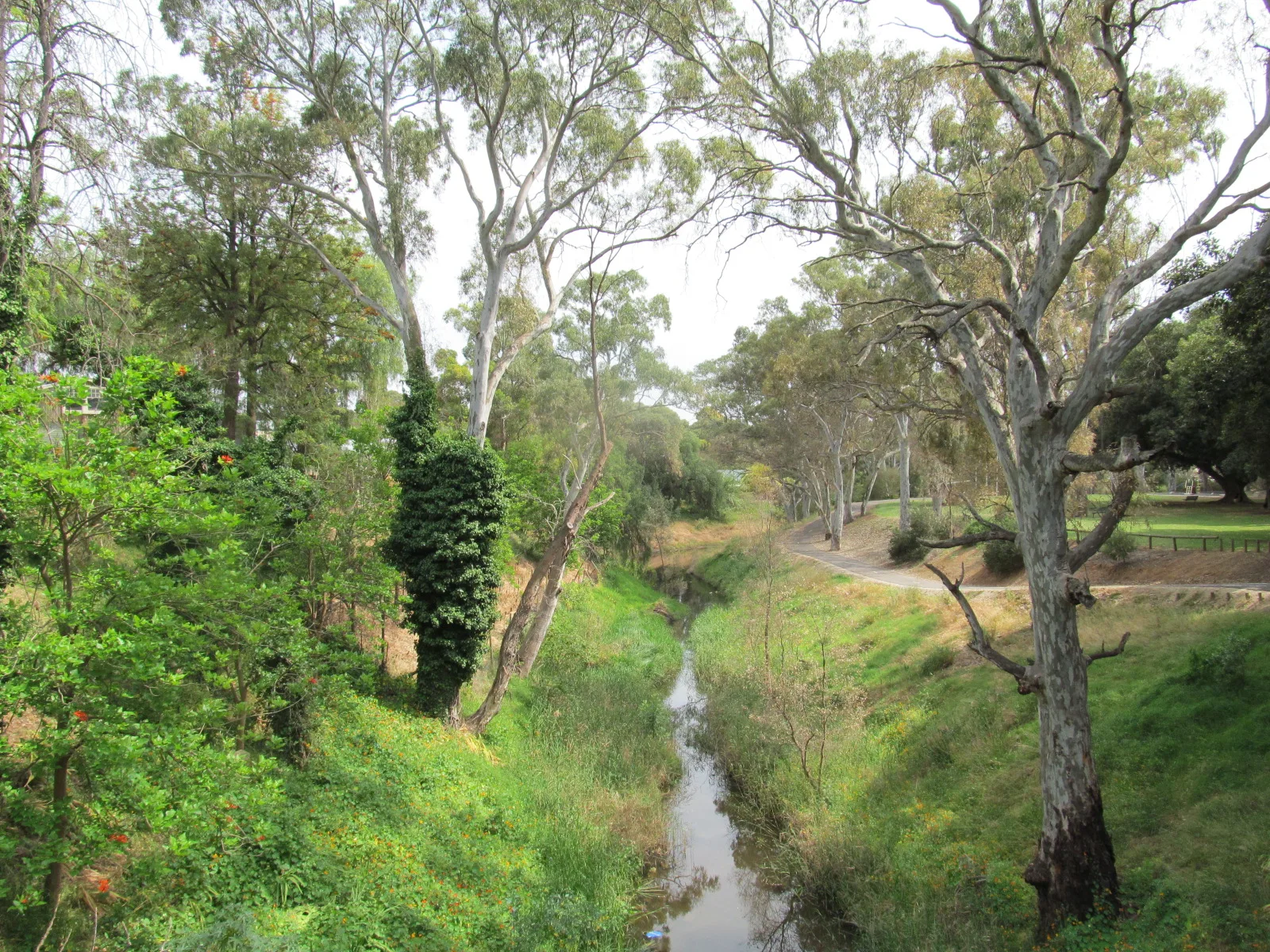
Murray Street is the town's main street and has been since the early 1840s; it takes its name from Henry Dundas Murray, one of the settlers behind the original survey. It is lined with nineteenth-century hotels, banks and shopfronts under verandahs, mixed with everyday shops, and it is where you will find somewhere for coffee or lunch. A horse-drawn tram once ran along it from the railway station.
Wander its length, look up at the upper storeys, and step down to the river reserves at either end, where the town's parklands follow the North and South Para. Browse our cafés and bakeries before you go.
Church Hill
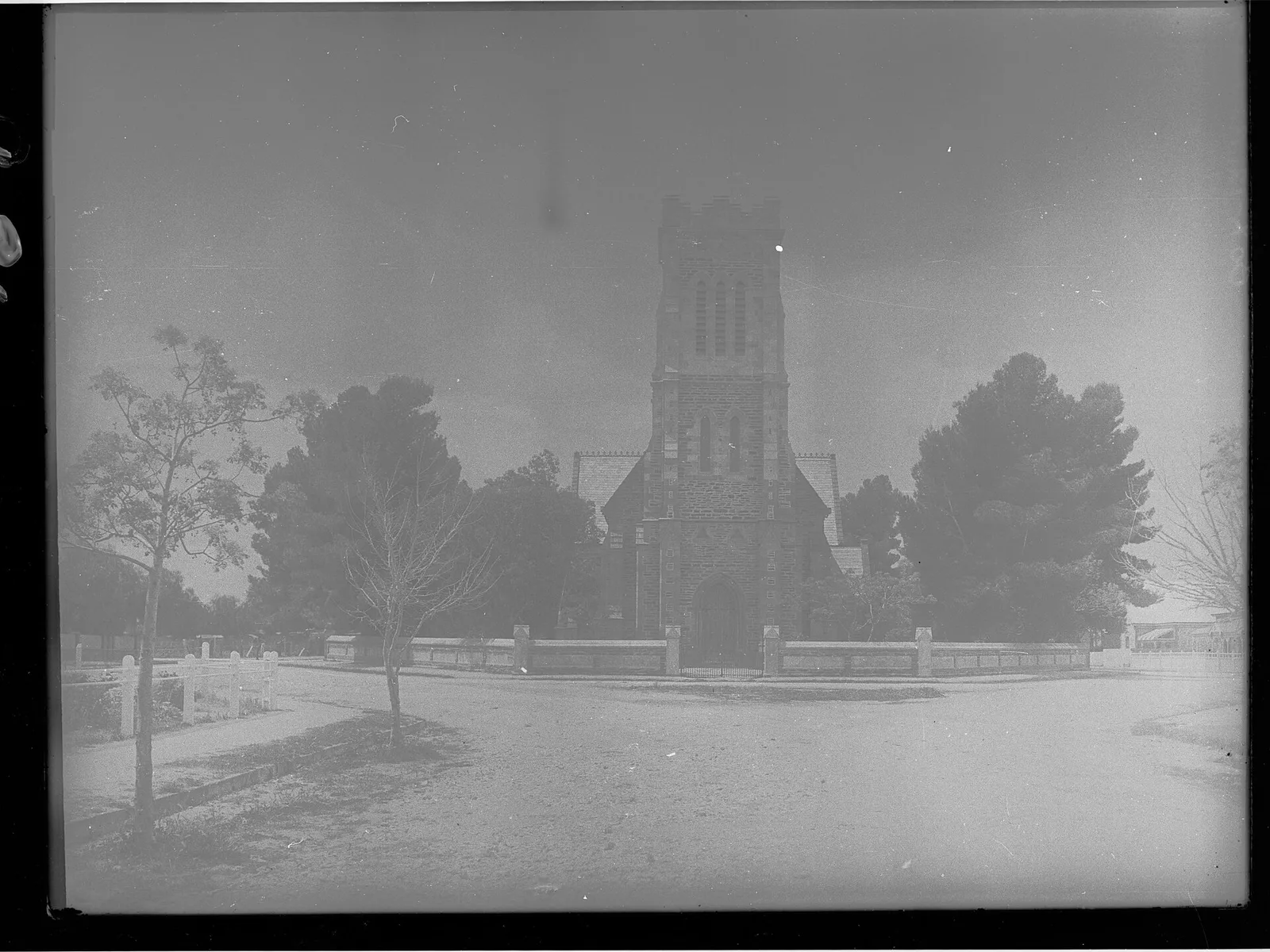
Just west of the main street, on a natural rise about ten metres above the river flats, is Church Hill, the heart of Light's plan and a State Heritage Area since 1985. Light broke from the grid here: a broad central street, Cowan Street, links squares that were set aside for the town's main churches.
Today Cowan Street is wide and tree-lined, with Light Square and Orleana Square still open. St George's Anglican Church stands in Orleana Square and the Catholic church of St Peter and St Paul at the far end; other churches in the precinct include the former Presbyterian church of the 1850s, the former Congregational church of 1861 and Zion Lutheran Church of 1921. Around them are early Victorian cottages, villas and Federation bungalows, the 1881 Court House and the Old Bushman Inn.
The area is best seen on foot. It is the only part of Gawler that keeps its nineteenth-century residential feel, and because traffic bypasses it, the walk is quiet.
Getting there
By train. The Gawler line was fully electrified in 2023, a 42-kilometre route from Adelaide Railway Station through Mawson Lakes, Salisbury, Elizabeth and Smithfield. Trains run either to Gawler station or on to Gawler Central, the end of the line and the station closest to the town centre. Use the Adelaide Metro journey planner for current times and check for planned closures before you travel. Our guide to getting around Adelaide explains tickets.
By car. Gawler is about 44 kilometres north of the city; Main North Road is the historic route.
On to the Barossa
Gawler is the gateway to the Barossa. Regional LinkSA buses run between Gawler and Angaston, with some services via Lyndoch and Williamstown, so you can combine a morning in Gawler with an afternoon among the Barossa towns. Timetables are limited, so check them before you set out. Our Barossa Valley day trip guide covers the valley, and our guide to South Australia's wine regions puts it in context.
A day in Gawler
- Morning: an early train from the city to Gawler Central.
- Late morning: walk Murray Street from end to end and down to the river.
- Lunch: a café or pub on the main street.
- Afternoon: the Church Hill walk along Cowan Street, then either the train home or a bus on to the Barossa.
Before you go
- Heat: Gawler is inland and summer days can be hotter than on the coast. Bring water and a hat, and plan walks for the morning. Our heatwave safety guide has more.
- Timetables: check the train and any connecting bus before you travel, especially on Sundays and public holidays.
- Local information: the Town of Gawler publishes visitor information, heritage walks and events.
- Driving and drinking: if a Barossa cellar door is on the list, take the bus or choose a designated driver.
For more trips by train, see our Port Adelaide guide and Belair National Park guide, and for a Hills village by bus, our Hahndorf day trip guide.
Frequently asked questions
How far is Gawler from Adelaide?
About 44 kilometres north of the city centre. The electric Gawler line train runs from Adelaide Railway Station to Gawler and Gawler Central.
Is the Gawler train line electric?
Yes. The 42-kilometre line from Adelaide to Gawler was electrified, and the State Government announced the completion of the project in December 2023 when the last new electric train joined the Gawler fleet.
Why is Gawler historically important?
It was South Australia’s first country town, laid out in 1839 to a plan by Colonel William Light. It grew rich as a staging post for the copper trade and later as a market town, and the Song of Australia was first performed there in 1859.
What is Church Hill in Gawler?
The residential heart of Light’s plan for Gawler: a wide street, Cowan Street, linking squares reserved for churches, with nineteenth-century cottages around them. It was declared a State Heritage Area in 1985.
Can I get from Gawler to the Barossa by bus?
Yes. LinkSA runs regional buses between Gawler and Angaston, some via Lyndoch and Williamstown. Services are limited, so check the timetable before you travel.
Your next customer could start right here.
Introduce your business to people discovering Adelaide: locals, visitors and the businesses that serve them.
Explore placements and request a private quote
Sources
Where the facts come from
The 7 references this article was checked against.
- Gawler Church Hill State Heritage Area (fact sheet) (opens in a new tab)
Department for Environment and Water, South Australia · cdn.environment.sa.gov.au
Light’s plan, the 1839 founding, the copper trade, the Colonial Athens, the Song of Australia, Church Hill’s squares and buildings.
- Gawler Church Hill (opens in a new tab)
Department for Environment and Water, South Australia · environment.sa.gov.au
Distance from Adelaide, gateway to the Barossa, the heritage area.
- It’s electrifying! Journey’s end for Gawler line project (opens in a new tab)
Department for Infrastructure and Transport · dit.sa.gov.au
Completion of the 42-kilometre electrification in December 2023.
- Train routes (opens in a new tab)
Adelaide Metro · adelaidemetro.com.au
Gawler and Gawler Central services and the stations on the way.
- Gawler, South Australia (opens in a new tab)
Wikipedia · en.wikipedia.org
Murray Street and its name, the horse tram and the railway.
- Town of Gawler (opens in a new tab)
Town of Gawler · gawler.sa.gov.au
Visitor information, heritage and events.
Comments
No comments yet. Be the first to join the conversation.
Leave a comment
Every comment is read by a moderator before it appears. Your email address is never published; it is used only to contact you about this comment.
More from Adelaide Sphere

Local guideDay trips
Cherry picking in the Adelaide Hills: the season, how it works and etiquette
A guide to pick-your-own cherries in the Adelaide Hills: when the season runs, where the orchards are, how picking and shed-door sales work, orchard etiquette, and other fruit to pick through summer.
By Adelaide Sphere

Local guideDay trips
Murray Bridge and the River Murray: a day trip from Adelaide
An easy day on the River Murray from Adelaide: Murray Bridge and its historic bridges, the Bunyip at Sturt Reserve, Monarto Safari Park on the way, and the paddle steamer town of Mannum upstream.
By Adelaide Sphere

Local guideDay trips
Victor Harbor and Granite Island: a day trip from Adelaide
How to spend a day at Victor Harbor: the new causeway and the horse-drawn tram to Granite Island, the island walk, little penguins, southern right whales in winter, the Cockle Train and Horseshoe Bay at Port Elliot.
By Adelaide Sphere