

Glenelg: a first-visit guide to the tram, the jetty and the bay
How to spend a day at Glenelg: the tram from the city, the beach and jetty, Jetty Road, the history of Pathawilyangga and the Old Gum Tree, boat trips on the bay, and the best time to go.
Updated 4 min read

In this article
Glenelg is Adelaide's best-known beach, and the easiest to reach: a tram runs straight from the city centre to the sand. In one short walk you have a long, calm, patrolled beach, a jetty, a busy shopping and eating street, a marina, and the place where South Australia was proclaimed in 1836.
This guide is for a first visit, or for showing the bay to someone else. It covers getting there, what to see, how to plan the day, and what to know before you go.
Getting there
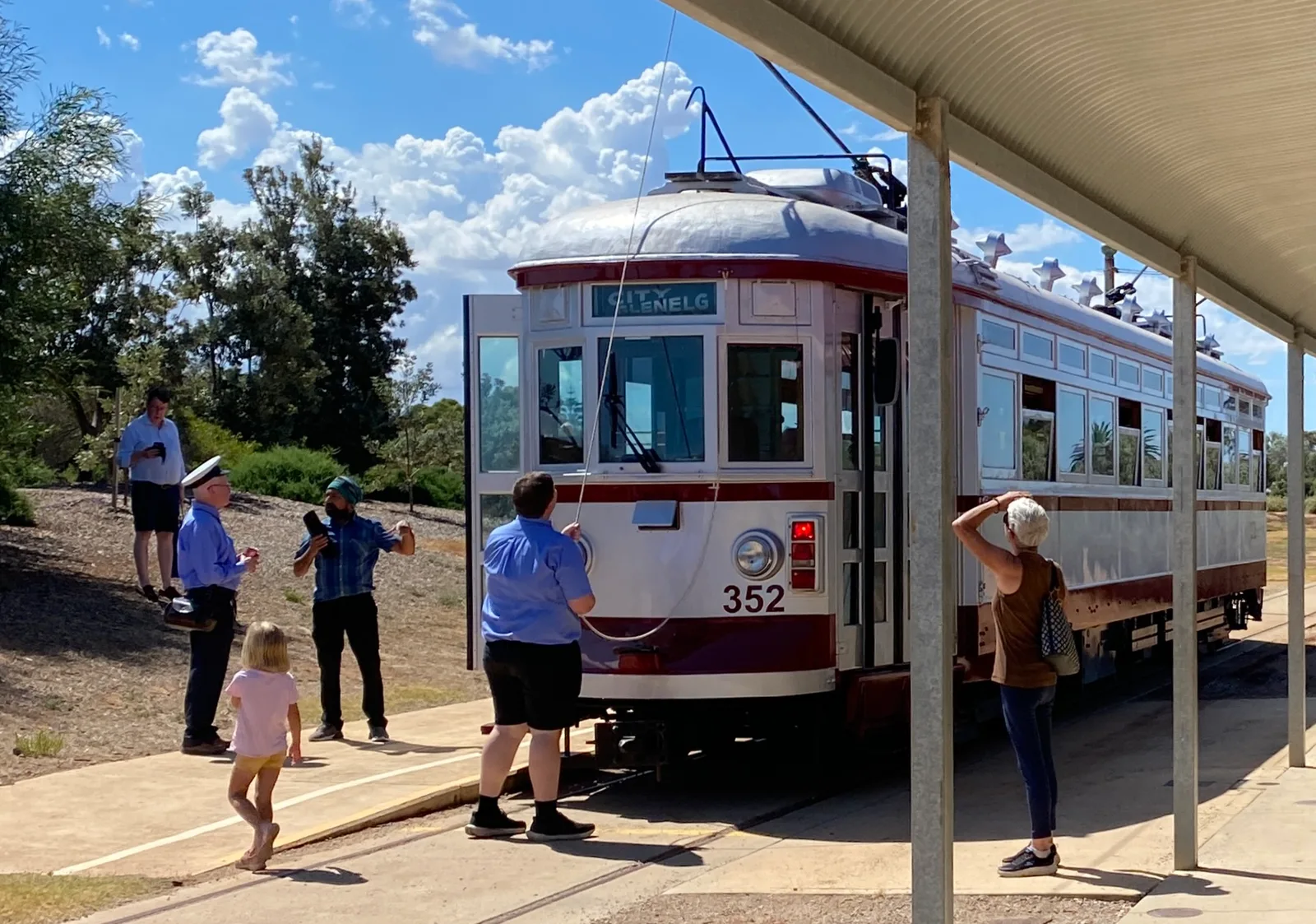
By tram. The Glenelg tram runs from the city to Moseley Square, its end point at the bottom of Jetty Road, beside the beach. From Victoria Square the ride takes about 25 minutes, and trams run every 10 to 15 minutes for most of the day. Travel within the city centre is free; the trip to Glenelg needs an Adelaide Metro ticket. Check Adelaide Metro for any service changes before you go.
By car. Glenelg is about 11 kilometres south-west of the city. Parking near the beach is metered and fills early on a summer weekend; the tram is usually the easier choice.
The beach
Glenelg's beach faces west across the sheltered waters of Gulf St Vincent, so the water is usually calm and shallow, which suits children and anyone who prefers a gentle swim. The surf life saving club patrols in the warmer months, mostly on weekends and public holidays: swim between the red and yellow flags when they are up, and check Beachsafe for the day's conditions.
Because the coast faces west, every clear evening ends with a sunset over the water. The beach gets very busy on hot weekends; for space, walk a few minutes north towards Glenelg North, or come on a weekday morning.
The jetty
Glenelg's first jetty opened in 1859, a 381-metre screw-pile pier that was the first of its kind in the state. A violent storm destroyed it in 1948, and the shorter jetty you walk on today, about 215 metres long, opened in May 1969. A stroll to the end and back is part of every visit, and people fish from it, so take care around lines and hooks.
Jetty Road
Jetty Road runs inland from Moseley Square and is lined for more than a kilometre with cafés, restaurants, ice-cream shops, bakeries and boutiques; the tram runs down the middle of it. It is the obvious place for lunch, and on summer evenings the street and the square stay busy until late. Browse our cafés and restaurants to find somewhere to eat.
History: Pathawilyangga and the Old Gum Tree
Long before the colony, Pathawilyangga, as the Kaurna people call the place, was a meeting place for ceremony, trade and camping. The Bay Discovery Centre in the old Glenelg Town Hall on Moseley Square tells the story of the bay, from Kaurna life on the coast to the seaside town.
On 28 December 1836, the Proclamation establishing the colony of South Australia was read beneath a bent gum tree in what is now Glenelg North. The tree has long since died, but its preserved trunk stands in the Old Gum Tree Reserve on McFarlane Street, and every 28 December the Proclamation is read there again at a public ceremony.
On the water
The Holdfast Shores marina, just south of the jetty, is the starting point for boat trips on the bay, including sunset sails and cruises to see the wild bottlenose dolphins that live along the metropolitan coast; some operators offer swims with them in the warmer months. Conditions, prices and seasons vary by operator, so check before you book, and ask what happens if the weather turns.
A day at Glenelg
- Morning: take the tram down early, swim while the beach is quiet, and walk the jetty.
- Late morning: the Bay Discovery Centre, then the short walk north to the Old Gum Tree.
- Lunch: Jetty Road, or fish and chips on the lawn.
- Afternoon: a boat trip from the marina, or more beach.
- Evening: the sunset from the beach or the jetty, then dinner before the tram home.
Before you go
- Sun and heat: the UV is high from spring to autumn. Bring a hat, sunscreen and water, and find shade in the middle of the day.
- Dogs: dogs must be on a lead on Holdfast Bay's beaches from 10am to 8pm during daylight saving time. Our guide to dog-friendly beaches explains the rules.
- Accessibility: Moseley Square, Jetty Road and the jetty are flat and paved; the council publishes current beach access information.
- Busy days: summer weekends, public holidays and big events fill the square, the trams and the car parks. Arrive early.
For the rest of the coast, from Semaphore to Aldinga, see our guide to Adelaide's beaches, and for more sunset spots, our guide to Adelaide sunset views.
Frequently asked questions
How do I get to Glenelg from Adelaide?
The tram runs from the city centre to Moseley Square, beside Glenelg beach. From Victoria Square the ride takes about 25 minutes, with trams every 10 to 15 minutes for most of the day. The trip needs an Adelaide Metro ticket.
Is Glenelg beach good for swimming?
Yes. It faces the sheltered gulf, so the water is usually calm and shallow, and it is patrolled by the surf life saving club in the warmer months, mostly on weekends and public holidays. Swim between the flags and check Beachsafe for conditions.
How long is the Glenelg jetty?
The current jetty is about 215 metres long and opened in 1969, replacing the original 381-metre jetty of 1859, which a storm destroyed in 1948.
What is the Old Gum Tree in Glenelg?
The place in Glenelg North where the Proclamation of South Australia was read on 28 December 1836. The preserved trunk stands in a reserve on McFarlane Street, and the Proclamation is read there each year on 28 December.
Can I take my dog to Glenelg beach?
Yes, at certain times. During daylight saving time dogs must be on a lead between 10am and 8pm; outside those hours, and outside daylight saving, they can be off lead under effective control. Some areas have their own rules.
Your next customer could start right here.
Introduce your business to people discovering Adelaide: locals, visitors and the businesses that serve them.
Explore placements and request a private quote
Sources
Where the facts come from
The 7 references this article was checked against.
- Getting here and around (opens in a new tab)
City of Holdfast Bay · holdfast.sa.gov.au
Tram frequency and travel to Glenelg.
- Glenelg jetty (opens in a new tab)
State Library of South Australia (SA Memory) · samemory.sa.gov.au
The 1859 jetty, its loss in 1948 and the 215-metre replacement.
- 18 May 1969: Glenelg jetty (opens in a new tab)
Discover South Australia’s History · discoversouthaustraliashistory.org.au
Opening of the current jetty.
- Proclamation Day (opens in a new tab)
City of Holdfast Bay · holdfast.sa.gov.au
The 1836 Proclamation, the Old Gum Tree and the annual ceremony; Pathawilyangga.
- Dogs (opens in a new tab)
City of Holdfast Bay · holdfast.sa.gov.au
Dog rules on Holdfast Bay beaches.
Comments
No comments yet. Be the first to join the conversation.
Leave a comment
Every comment is read by a moderator before it appears. Your email address is never published; it is used only to contact you about this comment.
More from Adelaide Sphere

Local guideThings to do
Henley Beach: a guide to the square, the jetty and the sunsets
How to spend a day or an evening at Henley Beach: Henley Square, the jetty and its history, sunset over the gulf, Grange and Sturt’s cottage next door, and getting there from the city.
By Adelaide Sphere

Local guideThings to do
Hallett Cove: the boardwalk, the Sugarloaf and an ancient ice age
A guide to Hallett Cove Conservation Park and the cliff-top boardwalk to Marino: Permian glacial pavements, the Sugarloaf, Aboriginal heritage and the Tjilbruke Dreaming, trains at both ends, and how to stay safe.
By Adelaide Sphere

Local guideThings to do
Rundle Street and Rundle Mall: a guide to Adelaide’s best-known street
Adelaide’s best-known street in two halves: Rundle Mall for shopping, and Rundle Street in the East End for cafés, restaurants, a cinema and festival nights, with its history and how to spend a day there.
By Adelaide Sphere