

Snorkelling and diving near Adelaide: reefs, jetties, wrecks and the rules
Where to snorkel and dive near Adelaide, from the Port Noarlunga and Aldinga reefs to the leafy seadragons of Rapid Bay and the new MV Andrew Wilson wreck, with the marine park rules and how to stay safe.
6 min read

In this article
Gulf St Vincent is one of the easiest places in Australia to put your face in the water. Within an hour or so of the city there are shallow limestone reefs you can reach from the beach, old jetties whose piles are crusted with sponges, and wrecks sunk on purpose for divers. The best known resident is the leafy seadragon, South Australia’s marine emblem.
This guide covers the main snorkelling and dive sites south of Adelaide and on Yorke Peninsula, the marine park rules that apply, and how to stay safe. Water conditions and access change, so treat it as a starting point and check before you go.
The short version
- For first-timers: the reefs at Port Noarlunga and Aldinga, both in Encounter Marine Park, are shallow with easy access.
- For seadragons: Rapid Bay jetty and Second Valley on the Fleurieu Peninsula.
- For wreck divers: the ex-HMAS Hobart off Rapid Bay, and the MV Andrew Wilson, scuttled off Brighton in September 2026.
- Closed or restricted: Edithburgh jetty is closed for repairs until mid-2027, and nobody may go under or within 20 metres of the old Rapid Bay jetty.
- The rules: sanctuary zones are no-take areas, but diving and snorkelling are welcome in them.
Beginner reefs: Port Noarlunga and Aldinga
National Parks and Wildlife Service SA names the reefs off Port Noarlunga and Aldinga as the place to make a first splash. The water is shallow, you walk in from the shore, and the reefs hold schools of old wives and silver drummers, orange biscuit stars and kelp. Across both reef systems, more than 200 marine plant species and more than 60 fish species have been recorded.
At Port Noarlunga, stairs on the jetty give easy access to the reef. Our Port Noarlunga reef guide covers the site in detail. Aldinga Reef, protected since 1971, is a broad platform that is exposed at low tide; the government describes it as one of the best examples of a temperate southern reef and one of Australia’s best dive sites.
Just south, the wreck of the Star of Greece lies in shallow water close to shore at Port Willunga and is a popular snorkel.
Rapid Bay and Second Valley: the seadragon coast
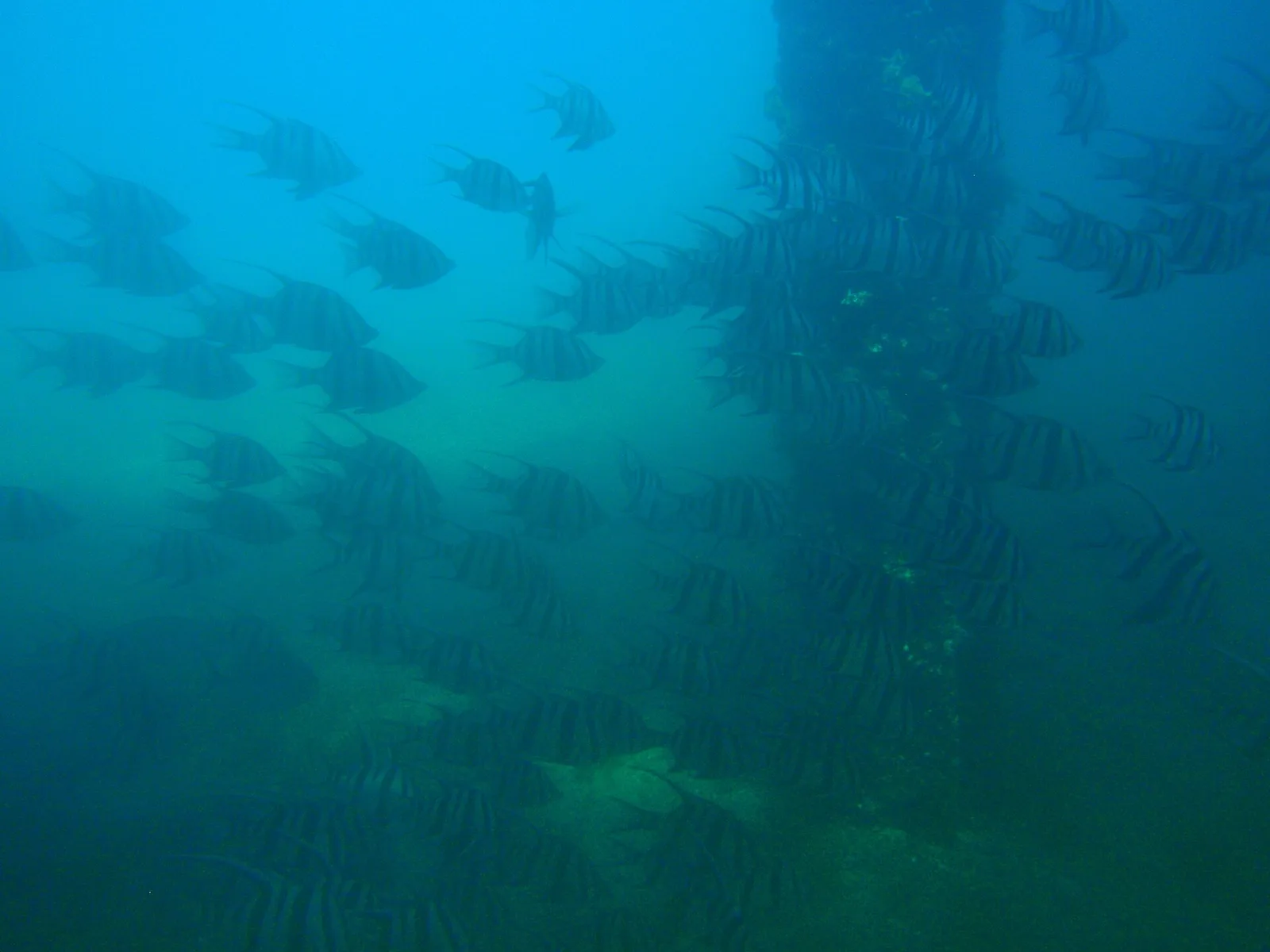
Further down the Fleurieu Peninsula, Rapid Bay jetty is the state’s best-known place to look for leafy seadragons. The marine parks agency calls it the best and safest place to see them, because they gather in the habitat that has grown up around the jetty. Second Valley, a small bay just north, is another sheltered spot where seadragons, sea urchins, leatherjackets and salmon trout turn up. Both sit in Encounter Marine Park.
There are two jetties at Rapid Bay. The old one is now off limits: the Department for Infrastructure and Transport has set an exclusion zone, and all vessels, divers and swimmers are banned beneath it and within 20 metres of it. Buoys and signs mark the area. Maintenance on the new jetty was completed in 2025, and its stairs give access to the water.
Seadragons are superbly camouflaged and look like drifting weed, so swim slowly and look closely. Never touch or move one.
Wrecks for qualified divers
- Ex-HMAS Hobart: a former navy warship prepared and scuttled as a dive site. It lies in about 30 metres of water in the Rapid Head Sanctuary Zone off Rapid Bay and is recommended for experienced divers. No permit is needed to dive it.
- MV Andrew Wilson: a 40-metre dredger built in 1962, scuttled on 7 September 2026 about six kilometres off Brighton to become an artificial reef. It sits upright on sand in about 20 metres, and the government says the site suits divers with an entry-level scuba qualification, with compartments including the engine room, galley and bridge to swim through. A final safety check was to be done before public diving began, so confirm it is open. Fishing is banned within 200 metres of the wreck for 12 months from 7 September 2026.
Both are boat dives. If you do not have your own boat, look for licensed dive operators in our tours and experiences directory.
Edithburgh jetty, Yorke Peninsula
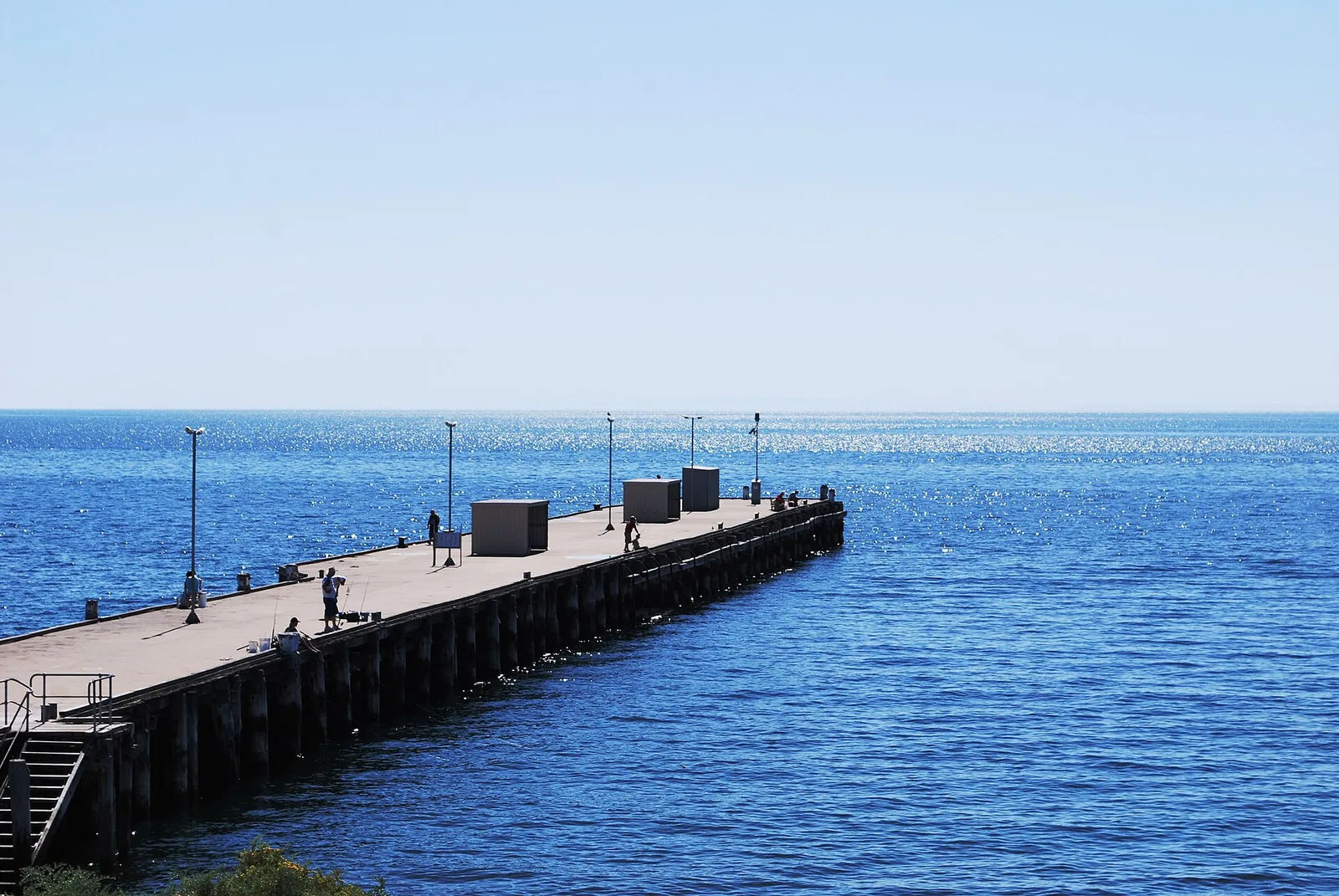
Edithburgh jetty, on Yorke Peninsula, is another jetty dive and snorkel site, and its council has been building new dive stairs there. However, the council has closed the jetty to the public from 24 July 2026 until mid-2027 while repairs are carried out, so plan a visit for after it reopens and check the Yorke Peninsula Council website first. Our Yorke Peninsula trip guide covers the rest of the region.
The rules underwater
- Sanctuary zones: these are no-take areas. You cannot fish or collect anything there, including shells, plants and seagrass, but diving, snorkelling, swimming and kayaking are welcome.
- Rocky shores: it is illegal anywhere in South Australia to remove animals from an intertidal rocky reef out to a depth of 2 metres.
- Spearfishing: banned within 100 metres of any jetty, landing or wharf statewide, along much of the metropolitan coast, in Second Valley Bay and in the Port Noarlunga Sanctuary Zone. PIRSA lists the exact areas.
- Marine mammals: keep at least 30 metres from whales when swimming. Never feed or harass dolphins.
- Look, don’t touch: fins and hands damage sponges and other sensitive life, so keep off the bottom.
Zone maps and GPS coordinates are on the marine parks website and in PIRSA’s free SA Fishing app.
Getting there
- Port Noarlunga: take the Seaford train line to Noarlunga Centre and connect by local bus, or drive. Check the Adelaide Metro journey planner.
- Aldinga, Port Willunga, Second Valley and Rapid Bay: these are easiest by car along the Fleurieu coast. Rapid Bay has a campground and Second Valley a caravan park.
- Edithburgh: a drive around the top of the gulf to the foot of Yorke Peninsula.
Before you go
- Check the conditions: read the Bureau of Meteorology marine forecast and the tide, and be ready to postpone. Wind and waves can change fast, and freak waves can wash over rocks without warning.
- The algal bloom: a harmful algal bloom affected Gulf St Vincent from March 2025. Testing has shown zero or low levels along most of the coast since February 2026, but marine life at some sites is still recovering. Avoid foamy or discoloured water and check the state government’s algal bloom site.
- Never alone: snorkel and dive with a buddy, use gear you know, drink water, wear sun protection or a wetsuit, and stay within your skills.
- Ask locally: before a new dive, talk to a dive shop or someone who has dived it recently.
- Report problems: call Fishwatch on 1800 065 522 to report fish deaths or illegal fishing.
For more of the coast, see our guide to Adelaide’s beaches, our beach safety guide and our Fleurieu Peninsula road trip. Prefer to stay on top of the water? Try our kayaking and paddleboarding guide.
Frequently asked questions
Where can beginners snorkel near Adelaide?
The reefs at Port Noarlunga and Aldinga in Encounter Marine Park are shallow with easy shore access and plenty of fish, which makes them the usual first choice. Go on a calm day and with a buddy.
Where can I see leafy seadragons near Adelaide?
Rapid Bay jetty and Second Valley on the Fleurieu Peninsula are the best-known spots. Stay out of the exclusion zone around the old Rapid Bay jetty, which covers the area beneath it and within 20 metres of it.
Can you snorkel in a marine park sanctuary zone?
Yes. Diving, snorkelling, swimming and kayaking are welcome in sanctuary zones. What is not allowed is fishing or taking anything, including shells and plants.
Is Edithburgh jetty open for diving?
Not at present. Yorke Peninsula Council closed the jetty from 24 July 2026 until mid-2027 for repair works. Check the council website before planning a trip.
Is the water safe after the algal bloom?
The state government says testing has shown zero or low levels of the bloom along most of the coast since February 2026. Avoid foamy or discoloured water, rinse off if your skin is irritated, and check the algal bloom website for the latest results.
Your next customer could start right here.
Introduce your business to people discovering Adelaide: locals, visitors and the businesses that serve them.
Explore placements and request a private quote
Sources
Where the facts come from
The 8 references this article was checked against.
- Encounter Marine Park (opens in a new tab)
National Parks and Wildlife Service SA · parks.sa.gov.au
Snorkel and dive sites, Aldinga Reef, Rapid Head Sanctuary Zone and HMAS Hobart, Star of Greece, sanctuary rules, whale distances and safety.
- Snorkelling and Diving (opens in a new tab)
National Parks and Wildlife Service SA · marineparks.sa.gov.au
Beginner reefs, species counts, leafy seadragon hot spots, Rapid Bay jetty and diving tips.
- Rapid Bay (opens in a new tab)
Department for Infrastructure and Transport · dit.sa.gov.au
The old jetty exclusion zone and maintenance of the new jetty.
- Fishing closures (opens in a new tab)
PIRSA · pir.sa.gov.au
Intertidal reef protection, spearfishing restrictions and the MV Andrew Wilson closure.
- Iconic vessel sinks into retirement to boost algal bloom recovery (opens in a new tab)
Government of South Australia · algalbloom.sa.gov.au
The MV Andrew Wilson scuttling, depth, suitability and fishing ban.
- Algal Bloom Update (opens in a new tab)
Government of South Australia · algalbloom.sa.gov.au
The bloom since March 2025, testing results since February 2026 and health advice.
- Ardrossan and Edithburgh jetty works update (opens in a new tab)
Yorke Peninsula Council · yorke.sa.gov.au
Edithburgh jetty closure from 24 July until mid-2027.
- Works on Edithburgh dive stairs to start (opens in a new tab)
Yorke Peninsula Council · yorke.sa.gov.au
The new dive stairs and the site’s popularity with divers.
Comments
No comments yet. Be the first to join the conversation.
Leave a comment
Every comment is read by a moderator before it appears. Your email address is never published; it is used only to contact you about this comment.
More from Adelaide Sphere

Local guideThings to do
Adelaide Botanic Garden: glasshouses, roses, guided walks and more
Plan a visit to the free Adelaide Botanic Garden: the 1870s Palm House, the Bicentennial Conservatory, Ficus Avenue, the rose gardens, the First Creek Wetland, the daily free guided walk, and what to know before you go.
By Adelaide Sphere

Local guideThings to do
Morialta Conservation Park: the falls walks, climbing and koalas
A guide to Morialta Conservation Park in Adelaide’s foothills: the walks to First, Second and Third Falls, the rock climbing area, the koalas and other wildlife, dogs, and how to check closures before you go.
By Adelaide Sphere

Local guideThings to do
Mount Lofty Summit and Cleland: the lookout, Flinders Column and the wildlife park
A guide to Mount Lofty Summit and Cleland National Park: the lookout over Adelaide, the history of the Flinders Column, the walks from the summit, Cleland Wildlife Park and its koalas, and what to check before you go.
By Adelaide Sphere