

South Australian seafood: whiting, prawns, oysters, rock lobster and tuna
A guide to the seafood South Australia is known for: King George whiting, Spencer Gulf prawns, Coffin Bay oysters, southern rock lobster and Port Lincoln’s southern bluefin tuna, how each is caught or farmed, and where to buy it.
6 min read

In this article
South Australia has a long, varied coastline: two big gulfs, the open Southern Ocean, sheltered bays on Eyre Peninsula and the cold waters of the south-east. Out of it comes some of the country’s most prized seafood.
This guide introduces five of the state’s signature catches, explains how each is fished or farmed, and suggests how to buy well. With summer coming and the Christmas table to fill, it is a good time to get to know it.
The short version
- King George whiting: the state’s favourite fish, taken by a long-standing commercial fishery and by recreational anglers.
- Spencer Gulf prawns: western king prawns from Spencer Gulf and the West Coast of Eyre Peninsula.
- Oysters: Pacific oysters farmed in clean bays from Ceduna to Kangaroo Island, Coffin Bay the best known.
- Southern rock lobster: caught in pots set overnight along the coast.
- Southern bluefin tuna: caught young in the Southern Ocean and grown in sea cages off Port Lincoln.
- Where to buy: the Adelaide Central Market, local fishmongers and seafood counters; ask where your fish came from.
How much seafood the state produces
South Australia’s fisheries and aquaculture together produced about 75,000 tonnes of seafood in 2024–25, according to the state’s primary industries department (PIRSA). Its list of signature species also includes abalone, blue mussels, southern garfish, snapper, calamari, pipis and yellowtail kingfish, so there is plenty beyond the five below.
King George whiting
If South Australians have a fish, this is it: delicate white fillets, usually lightly crumbed or battered and served with chips and lemon. King George whiting is one of the three main catches of the state’s commercial marine scalefish fishery, alongside southern garfish and southern calamari, and it is also a popular target for people fishing from boats and jetties.
The most recent national stock status report, published in 2023, rated all three South Australian whiting stocks (Gulf St Vincent, Spencer Gulf and the West Coast of Eyre Peninsula) as sustainable. Since then, a harmful algal bloom that began in 2025 has affected fish along parts of the coast, and the State Government has funded a restocking program that targets whiting and snapper. If you fish yourself, size limits, bag limits and seasonal closures apply and change, so check PIRSA’s species limits or the SA Fishing app before you go, and read our guide to fishing from Adelaide’s jetties.
Spencer Gulf prawns
The big, sweet prawns sold as Spencer Gulf or South Australian king prawns are western king prawns. They are caught by the Spencer Gulf and West Coast prawn fisheries, which work the waters of Spencer Gulf and the west coast of Eyre Peninsula, and a separate fishery operates in Gulf St Vincent. No new commercial licences are being issued, and the fisheries are managed under published management plans and regular stock assessments. Their prawns are approved for export under national environmental law.
Prawns are a Christmas favourite in Adelaide. Buy them cooked for the table, or green (raw) to barbecue, and keep them cold all the way home.
Coffin Bay and South Australian oysters
The oysters most South Australians eat are Pacific oysters, farmed in racks, rails and longlines in sheltered bays. The industry began in the late 1980s and is now the state’s second most valuable aquaculture sector. Oysters are grown at Ceduna, Smoky Bay, Streaky Bay, Coffin Bay, Cowell, Port Vincent, Stansbury, Coobowie Bay and on Kangaroo Island.
Coffin Bay, on the lower Eyre Peninsula, is the name most people know, but it is worth trying oysters from different bays side by side: the water each grows in gives them a slightly different character. Buy them from a seller with good turnover, keep them chilled and eat them soon after shucking.
Southern rock lobster
South Australia’s rock lobster fishery is built on the southern rock lobster, caught in pots that are set overnight. The fishery is split at the mouth of the River Murray into a southern zone, running to the Victorian border, and a northern zone, running west to the Western Australian border. Giant crabs and octopus are landed by the same fishery. Rock lobster is a special-occasion dish for most families, and you will see it on menus across the Limestone Coast as well as in the city.
Southern bluefin tuna from Port Lincoln
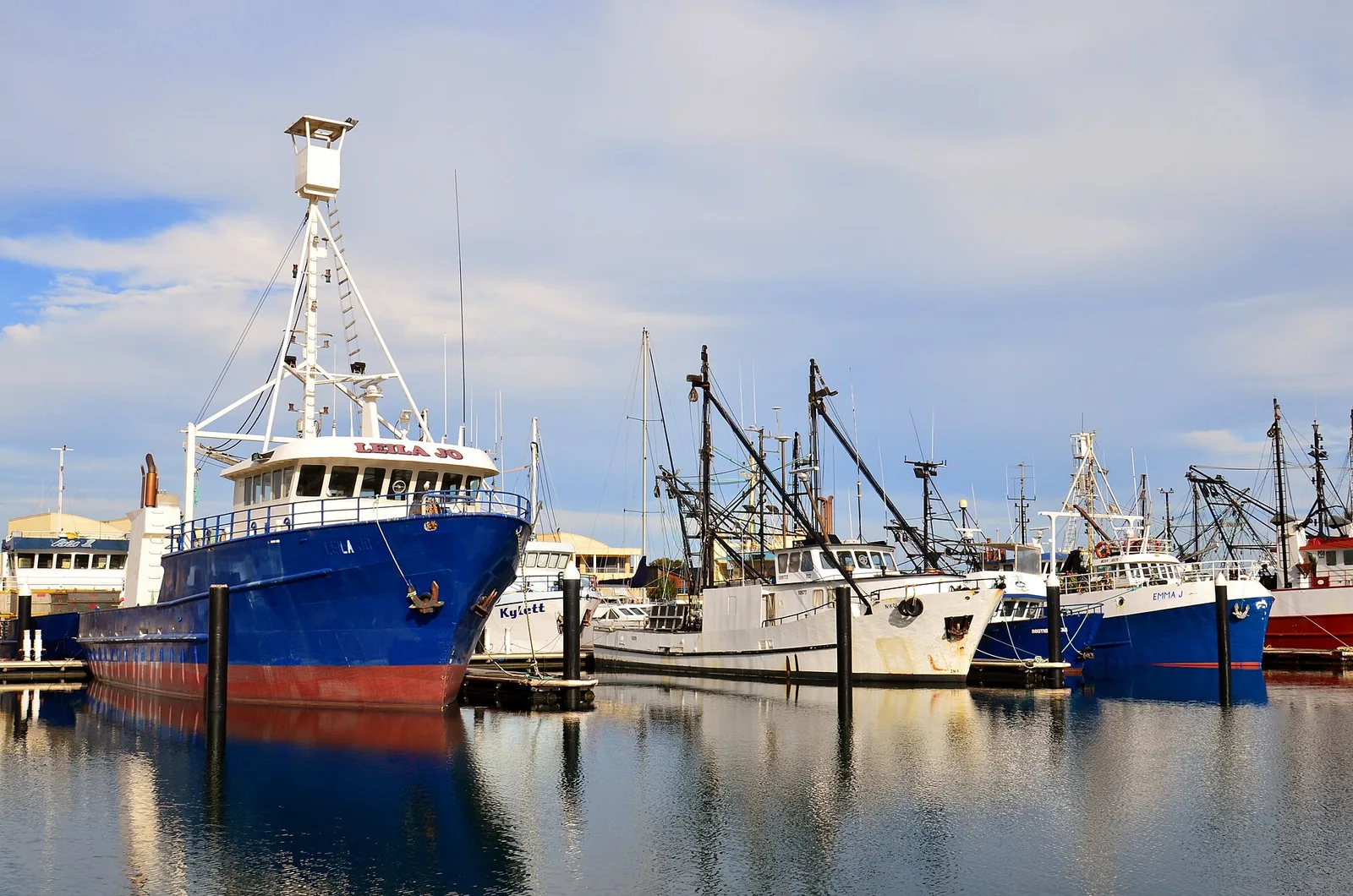
Port Lincoln, at the southern tip of Eyre Peninsula, is the home of Australia’s southern bluefin tuna farming. Young tuna are caught in the Southern Ocean, brought to waters off Port Lincoln and grown in large sea cages, looked after by dive teams. PIRSA says tuna farming is unique to South Australia, that all of Australia’s farmed southern bluefin is grown off Port Lincoln, and that it earns more at the farm gate than any other part of the state’s aquaculture. In Adelaide, look for it at seafood counters and on restaurant menus.
Port Lincoln is also a base for yellowtail kingfish farming: the fish are hatched on land on Eyre Peninsula and grown in sea cages in Spencer Gulf.
Is it safe and sustainable?
PIRSA describes South Australia’s fisheries and aquaculture as managed for ecologically sustainable development, with limited licences, management plans and regular stock assessments. During the 2025 algal bloom, SA Health advised that all commercially available seafood from South Australian waters is safe to eat; check SA Health or PIRSA for current advice.
As a buyer, the best things you can do are simple:
- Ask where it came from and whether it was wild-caught or farmed.
- Choose local when the choice is there; look for South Australian origin on the label.
- Eat a wider range of species, such as garfish, calamari, mussels and pipis, not just the famous few.
Where to buy seafood in Adelaide
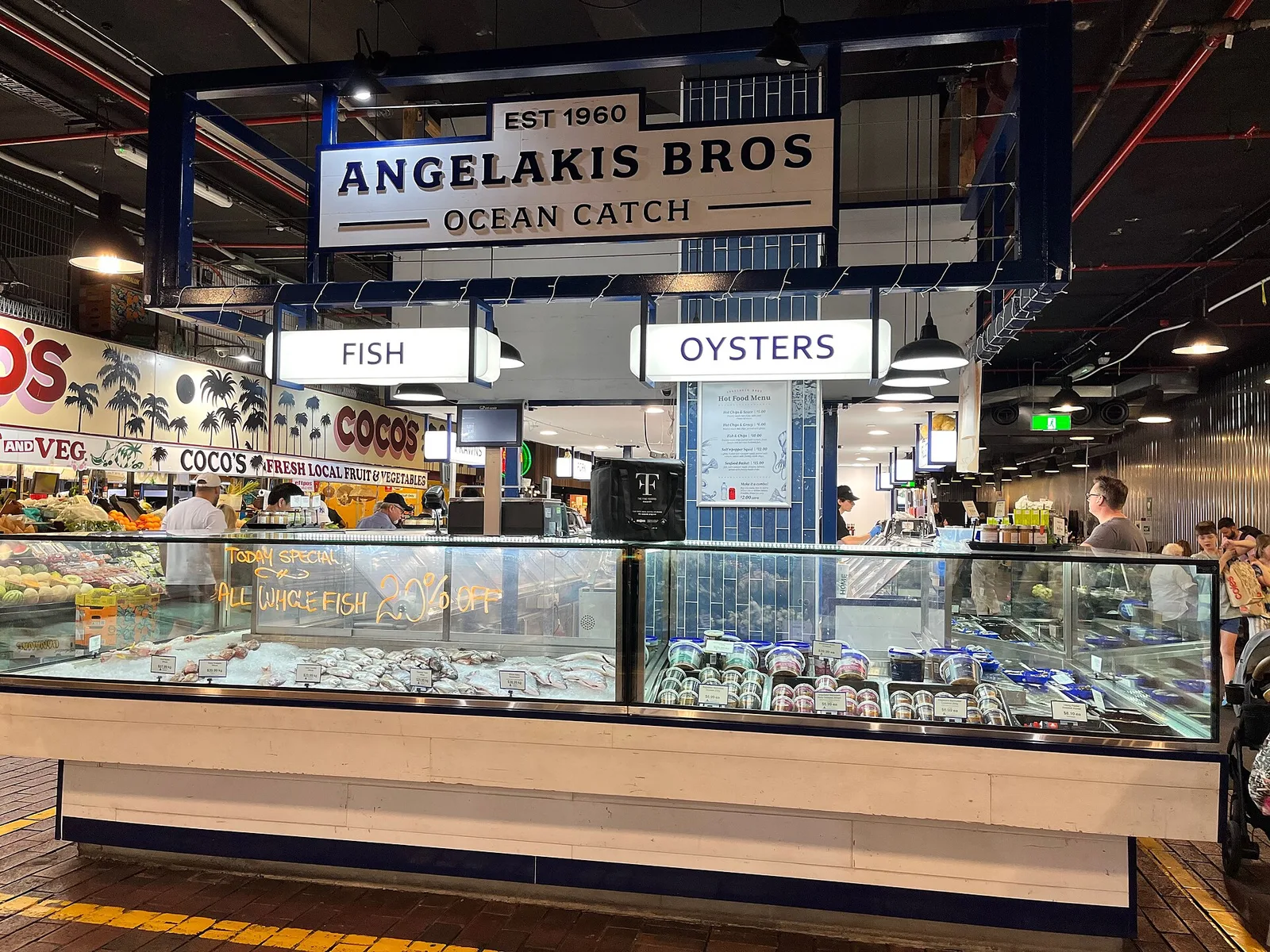
The Adelaide Central Market, includes seafood sellers among its stalls, which makes it an easy place to compare species in one visit. Beyond the market, suburban fishmongers and seafood counters are listed in our fresh food and groceries directory, and many restaurants build their menus around local fish. If you’d rather catch your own dinner, read our blue swimmer crabbing guide.
Getting there
The Central Market sits between Gouger and Grote streets in the city centre; see our market guide for transport and parking. Port Lincoln and Coffin Bay are a long way west on Eyre Peninsula; for a closer coastal trip, see our Yorke Peninsula guide.
Before you go
- Order ahead for Christmas. Seafood counters get very busy in the days before 25 December.
- Bring a cooler bag with ice packs; summer heat spoils seafood quickly.
- Check fishing rules with PIRSA before catching your own; limits change.
- Check current advice on the algal bloom from SA Health and PIRSA.
For more South Australian food, see our iconic foods guide and our guide to the state’s wine regions, then plan the rest of the festive season with our Christmas Day in Adelaide guide.
Frequently asked questions
What seafood is South Australia famous for?
King George whiting, Spencer Gulf western king prawns, Pacific oysters from bays such as Coffin Bay, southern rock lobster and southern bluefin tuna farmed off Port Lincoln are the best known.
Where are Coffin Bay oysters grown?
Coffin Bay is on the lower Eyre Peninsula. South Australian Pacific oysters are also grown at Ceduna, Smoky Bay, Streaky Bay, Cowell, Port Vincent, Stansbury, Coobowie Bay and Kangaroo Island.
How is Port Lincoln tuna farmed?
Young southern bluefin tuna are caught in the Southern Ocean, brought to waters off Port Lincoln and grown in sea cages. All of Australia’s farmed southern bluefin tuna is grown there.
Is South Australian seafood safe to eat after the algal bloom?
During the 2025 algal bloom, SA Health advised that all commercially available seafood from South Australian waters was safe to eat. Check SA Health or PIRSA for the latest advice.
Where can I buy fresh seafood in Adelaide?
The Adelaide Central Market includes seafood sellers, and there are fishmongers and seafood counters across the suburbs. Ask where the seafood came from and whether it was wild-caught or farmed.
Your next customer could start right here.
Introduce your business to people discovering Adelaide: locals, visitors and the businesses that serve them.
Explore placements and request a private quote
Sources
Where the facts come from
The 7 references this article was checked against.
- Seafood toolkit (opens in a new tab)
PIRSA · pir.sa.gov.au
Signature species, sustainable management and 2024–25 production.
- Marine aquaculture (opens in a new tab)
PIRSA · pir.sa.gov.au
Pacific oysters and growing areas, southern bluefin tuna farming at Port Lincoln, yellowtail kingfish.
- Spencer Gulf and West Coast prawn fisheries (opens in a new tab)
PIRSA · pir.sa.gov.au
Western king prawns, licensing, management plans, assessments and export approval.
- Rock lobster fishery and marine scalefish fishery (opens in a new tab)
PIRSA · pir.sa.gov.au
Southern rock lobster, pots, zones; whiting, garfish and calamari as main scalefish species.
- King George Whiting (2023) (opens in a new tab)
Status of Australian Fish Stocks · fish.gov.au
South Australia’s three whiting stocks rated sustainable.
- Algal bloom fish recovery program (opens in a new tab)
PIRSA · pir.sa.gov.au
Restocking program targeting snapper and King George whiting.
- Buy the best – buy SA seafood (opens in a new tab)
PIRSA · pir.sa.gov.au
SA Health advice that commercially available SA seafood is safe to eat (September 2025).
Comments
No comments yet. Be the first to join the conversation.
Leave a comment
Every comment is read by a moderator before it appears. Your email address is never published; it is used only to contact you about this comment.
More from Adelaide Sphere

Local guideFood and drink
Michelin star restaurants in Adelaide and South Australia: the first guide explained
South Australia now has Australia’s first MICHELIN-starred restaurants. Here is who won stars and Bib Gourmands in the inaugural guide, what each distinction means, where the restaurants are, and how to book and plan a visit.
By Adelaide Sphere

Local guideFood and drink
Dessert in Adelaide: gelato, chocolate, cakes and late-night sweets
Where to go for dessert in Adelaide, by area: Haigh’s chocolate at Beehive Corner and its free Parkside experience, a Hyde Park chocolatier, gelato on Glynburn Road, an egg-free dessert café open late, cakes in Prospect and ice cream by the beach.
By Adelaide Sphere

Local guideFood and drink
Breweries in Adelaide: taprooms, Coopers tours and Hills and Vale day trips
A guide to breweries in and around Adelaide: taprooms in the city, Stepney, Bowden and Port Adelaide, tours and tastings at Coopers in Regency Park, and brewery stops in the Adelaide Hills and McLaren Vale, with notes on food, children, dogs and getting home safely.
By Adelaide Sphere